

A draft law to decriminalise euthanasia received initial approval last week in the Spanish Parliament. It would allow people who are not terminally ill to avail of assisted suicide. In a vote on whether to allow the bill to proceed in the 350-seat parliament, 203 lawmakers voted in favor, 140 against and two abstained.
It was proposed by the Governing, left-wing coalition led by the PSOE party, and opposed by the Conservative Popular Party, the regional Navarra Suma, and the right-wing Vox.
The Bill, inspired by the Dutch and Belgian model, proposes that those who suffer a serious and incurable or disabling illness, with unbearable suffering could ask for euthanasia. First, the patient and a doctor will have to agree, afterwards a second medical opinion is needed, then the patient will have to confirm his decision two weeks later, and 15 days later it can be made. The process will not last more than a month.
The law would also foresee the creation of a Commission for Control and Evaluation in each region, in addition to a registry of health professionals who opt out as conscientious objectors.
The draft law must now go through the Health Commission, go back again to the Parliament and, finally, to the Senate, a process that could be resolved before summer.

The constitution’s special protection for marriage came in for criticism at Saturday’s meeting of the Citizens’ Assembly on gender equality with claims made that it excludes the recognition of non-traditional families.
Single mother Adele O’Connor and separated father Dave Saunders, from Tallaght, Dublin, gave personal testimonies on how the Constitution affected their lives.
Mr Saunders, an unmarried father and CEO of the From Lads to Dads focus group, said he had moved out of his family home 15 years ago after a relationship breakdown. He felt the Constitution had not recognised his or any other separated fathers’ rights.
Paula Fagan, CEO of LGBT Ireland and in a same-sex partnership raising two boys, said that Article 41.3.1 of the Constitution did not recognise her family even though it permits same-sex marriage.
She and her partner Denise “planned our family together and were lucky enough to have our gorgeous boys, who are the centre of our world”.
But Ms Fagan said, “only one of us is legally recognised as a parent”.
“Once there is a donor involved, it is a problem as far as the family is concerned. We ask you to recognise and protect our family by broadening the definition of family.”
The couple can both avail of guardianship rights for the children’s medical care but this entitlement “runs out at 18”. Ms Fagan said the Constitution “needs to recognise, protect and uphold what matters in a family”. But currently it’s “a barrier to recognising our family. Marriage equality didn’t fix this”.
Jonathan Lewis, of Peterborough City Council, said: “Meeting local need is always the priority.”
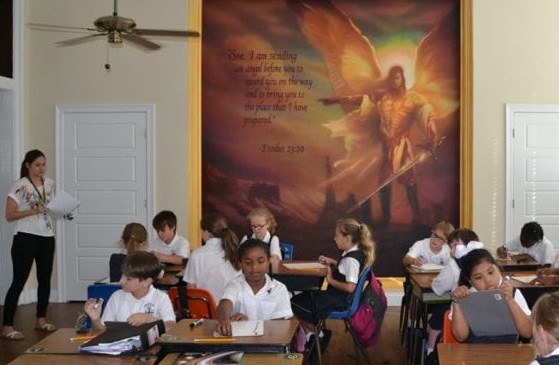
It will open to 90 children in 2022, growing to accommodate 630 pupils.
The government will pay 90% of the estimated £11m-£15m cost, with the city council contributing between £1.1m and £1.5m.
Plans for the primary school were approved on Wednesday night, despite an 11th-hour challenge from three city councillors. If the school is oversubscribed, it will make selection 80% Catholic faith-based, with the rest chosen by proximity. Critics said it was “discriminatory” for a Catholic school to prioritise children of the Catholic faith.
Joseph McCrossan, head teacher of St Alban’s Roman Catholic Primary School in Cambridge, said faith schools across the diocese were largely mixed.
“In my experience Catholic schools look at the wider community, at global issues, at other faiths, cultures and values. We celebrate that.”
A Department for Education spokesman said voluntary-aided schools were “among the best-performing in the country and are valued by parents for their strong and positive ethos”.
“Priority was given to schools that support integration and inclusivity when considering applications to help fund new voluntary aided schools,” a statement said.
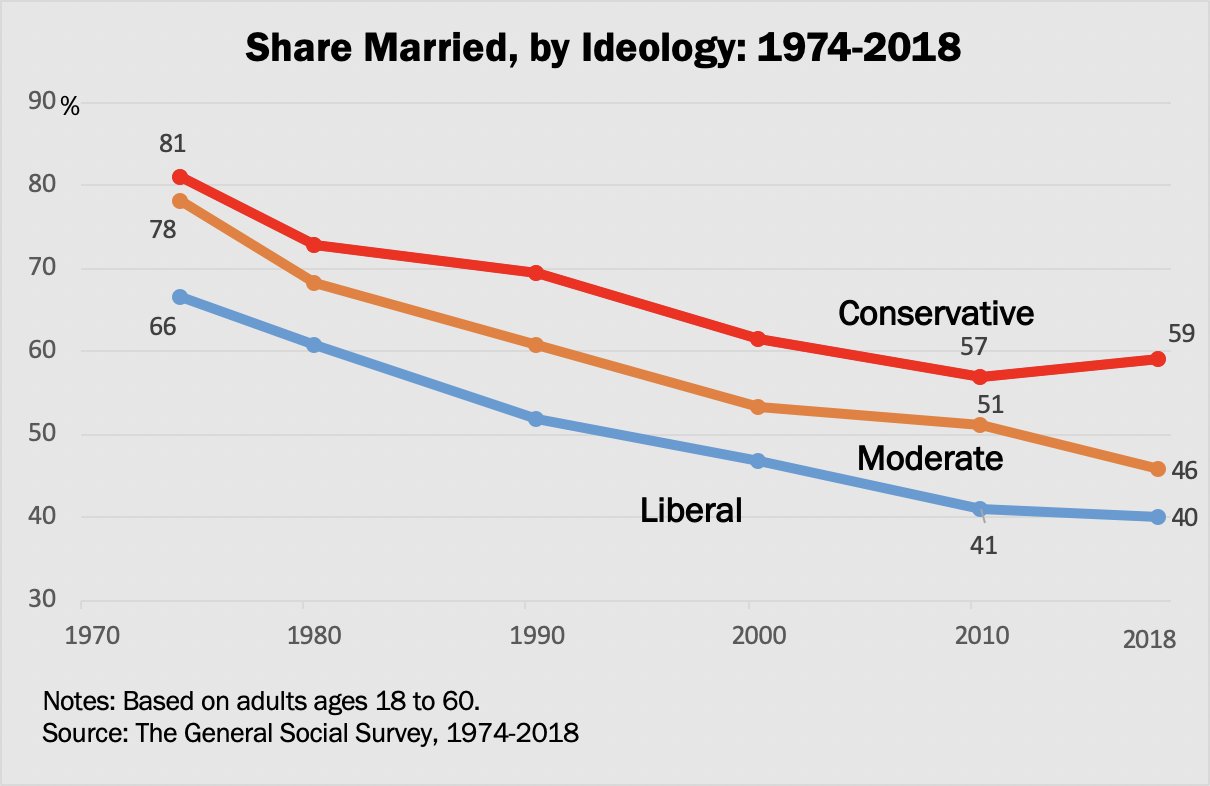
People of different political persuasions are pursuing marriage in the US at noticeably differing rates.
Professor and Director of the National Marriage Project at the University of Virginia, Brad Wilcox, calls it a “striking ideological divide” and said that it is large and growing.
Sociologist and Demographer, Wendy Wang, of the Institute of Family Studies, examined the rates of marriage of adults between the ages of 18 and 60 using data from the General Social Survey, 1974 -2018.
In 1974, 81% of self-described conservatives were married; 78% of moderates; and 66% of liberals. However, by 2018 the figures showed 59% of conservatives married; 46% of moderates; and 40% of liberals. The last decade in particular showed the rate of marriage among conservatives actually rose two points, while it continued to decline among moderates and liberals, thus widening the gap even further.

One of the most unlikeliest wins of this year’s General Election may have been down to a network of pro-life prayer groups.
Carol Nolan was first elected to the Dáil as a Sinn Féin candidate in 2016. However, she resigned from the party after campaigning against Repeal and voted against the Government’s abortion legislation. Without the support base, resources and political infrastructure of Sinn Féin, and with her 3 seat constituency in Offaly becoming a five-seater that included all of Laois as well, the odds of her reelection were quite low.
Writing in Laois Today, political commentator, John Whelan, said that a network of pro-life prayer groups, however, came to her aid and rescued her campaign. In the space of a few weeks her team galvanised support for her by phoning non-stop to a network of contacts that shared their Christian family values and pro-life stance.
She ended up winning the fourth seat in the constituency by a comfortable margin.

Researchers in the UK found that having 10 or more sexual partners over a lifetime almost doubled the risk of a woman developing cancer, and raised it by two thirds for men.
In addition, the study reported women with a higher number of sexual partners have heightened odds of a chronic health condition, though the same was not found in men.
The study, published in BMJ Sexual & Reproductive Health, draws on information from almost 6,000 respondents to an English longitudinal study on ageing.
As an observational study, it cannot establish cause. Nevertheless, the authors say their findings chime with those of previous studies implicating sexually transmitted infections in the development of several types of cancer and hepatitis.

The Catholic Church in Ireland is facing a data protection inquiry over its failure to delete records under the General Data Protection Regulation (GDPR), as requested by people who have renounced the religion.
Under GDPR, entities can be fined up to €10m or up to 2% of their global turnover for serious data protection breaches.
Marty Meany, editor of the tech website Goosed.ie, decided that he wanted to leave the church and have his baptismal record erased in the aftermath of the May 2018, abortion referendum. He wrote to the bishop of Ossory seeking to have his data deleted. The bishop, Dermot Farrell, responded, saying that while he respected the decision and it was noted on the diocese’s register, it was not possible to delete Meany’s name from baptism and confirmation registers or to annul the fact that he received these sacraments. “Church registers are documents of historic and archival significance,” said Farrell.
Meany initiated a complaint with the DPC on July 4, 2018. It has been assessing the complaint, along with others of a similar nature, and told Meany it had sought external legal advice. Under the Data Protection Act, the right to be forgotten may not apply to some information used for archival or historic research purposes.
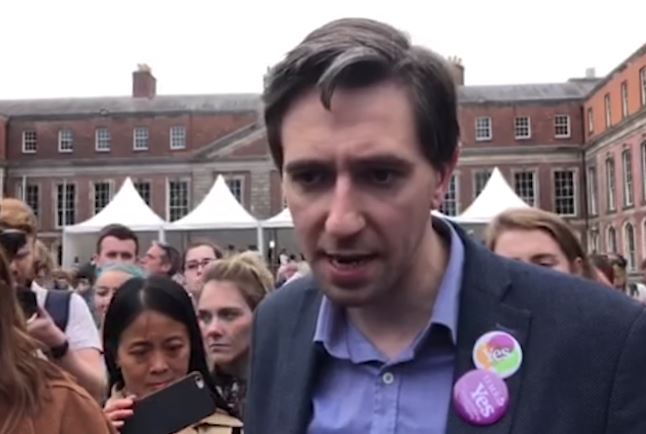
Fifteen of the State’s 19 Maternity Units are operating in sub-standard conditions, according to a report published by the Health and Information Authority (Hiqa) yesterday.
The report also found that the ten year National Maternity Strategy was grossly underfunded.
Róisín Molloy, whose newborn son Mark died in 2012 as a result of failings in Portlaoise hospital, said babies would continue to die unless a new government properly funds the strategy.
It was previously reported by the Irish Times that monies ringfenced for it were diverted to pay for the State’s new abortion regime.
Spokesperson for the Pro Life Campaign, Eilís Mulroy, said that the Hiqa findings have exposed an appalling legacy of ministerial and government neglect.
“It is an absolute scandal that abortion which has nothing to do with genuine healthcare was prioritised over safeguarding the lives of pregnant women and their babies,” she said.
“We need to re-focus on delivering the best care possible for mothers and babies and to avoid the ongoing rush to prioritise abortion funding to the clear detriment of mothers, babies and staff,” concluded Ms Mulroy.
A resolution on the protection of freedom of religion and belief in the workplace was passed by the Council of Europe last week. The Council is the continent’s leading Human Rights body uniting 47 member states, 27 of which are also members of the EU.
The resolution calls on member states to “take all necessary measures to combat discrimination based on religion or beliefs in all fields of civil, economic, political and cultural life”. It also asks them “to promote the work of national human rights institutions on combatting discrimination, including indirect discrimination based on religion or belief, and encourage them to develop training activities for both public and private employers”.

Thousands of Irish people continue to avail of the services of the marriage agency of the Catholic Bishops, but the number is falling.
Bishop Denis Nulty of Kildare and Leighlin unveiled the 2019 figures for Accord Catholic Marriage Care Service on Tuesday.
Nearly 15,000 people attended their Sacramental Marriage preparation courses, and 24,000 sessions of marriage and relationship counselling were provided for individuals and couples. However, both figures show a decline from previous years.
The number of Catholic weddings has been dropping steadily in Ireland for decades, with next year due to be the first on record where non-religious weddings outnumber Catholic ones. Under 4 per cent of marriages were non-religious in 1990, whilst over 93 per cent were Catholic. By 2018, the number of couples choosing a non-religious ceremony had climbed to 39 per cent, with only 48 per cent choosing to enter into a Catholic marriage.