

A Belfast woman has won High Court approval to challenge Northern Ireland’s strict abortion laws.
Sarah Ewart’s lawyers argued that the current regime breaches Article 8 of the European Convention on Human Rights, dealing with entitlements to private and family life. They also contended that the legislation is having a “chilling effect” on anyone considering assisting in an abortion as doctors could be left fearing potential life imprisonment if they become involved, the court heard.
Earlier this year Britain’s supreme court concluded that abortion laws in the North are incompatible with human rights law. But the court still rejected the case because the party who brought it, Northern Ireland’s Human Rights Commission, did not have the necessary legal standing.
Mrs Ewart has now brought a case in her own name, as a woman directly affected by the abortion legislation,
Mr Justice McCloskey ruled on Wednesday that she has established an arguable case against the Departments of Justice and Health at Stormont.

The Australian state of Tasmania is set to completely remove gender from birth certificates. The move is being hailed as a step forward for the State’s transgender residents but is being criticised by feminists.
The bill is expected to be put to a vote in Tasmania’s lower house next month, according to The Australian. The proposed change comes as part of amendments to a bill that puts an end to transgender people having to divorce before than can get their gender changed on official documents.
A spokesperson for the group Women Speak Tasmania, however, said there is a need to “protect the integrity of the historical record contained in birth certificates” by keeping gender markers.
“Birth certificates are historical records that serve a number of demographic functions and inform both government policy and legislation on a wide range of areas,” Ms Williams said in a statement.
She said laws where “biological males can be declared legally female” are impeding on women’s rights.

Americans who have only ever slept with their spouses are most likely to report being in a “very happy” marriage, a sociologist at the University of Utah in the US has found. Meanwhile, the lowest odds of marital happiness—about 13 percentage points lower than the one-partner women—belong to women who have had six to 10 sexual partners in their lives. For men, there’s also a dip in marital satisfaction after one partner, according to Nicholas Wolfinger of the Institute for Family Studies.
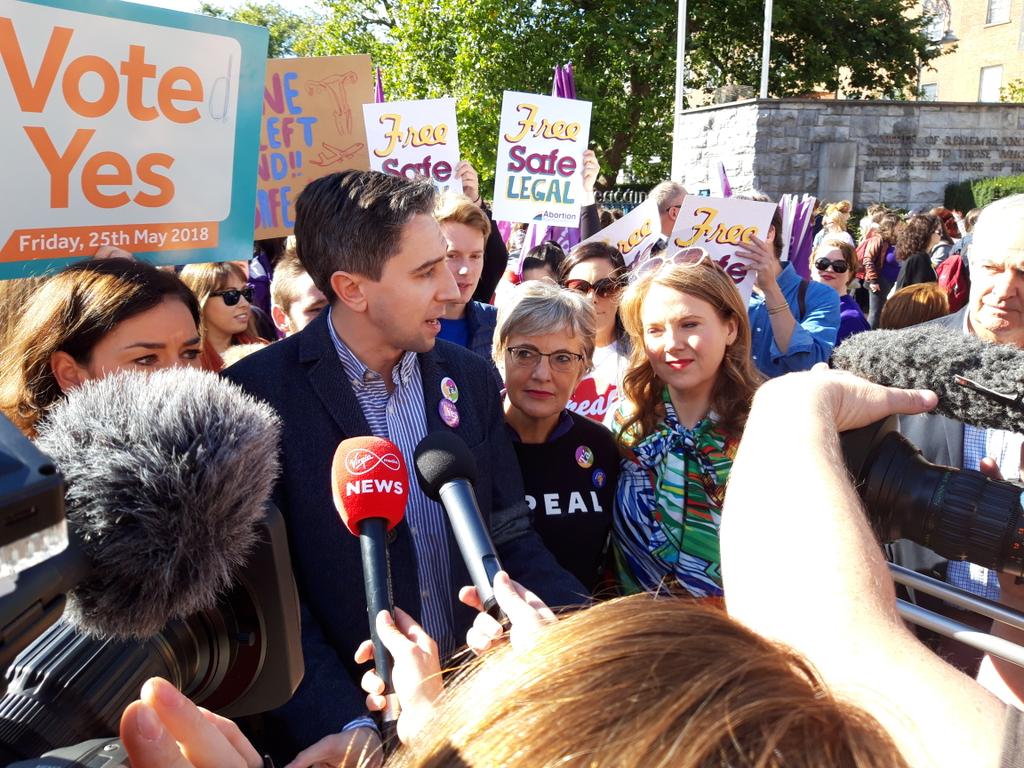
Abortion legislation passed the second stage of the Dáil’s legislative process yesterday by 102 votes to 12 with seven abstentions. It now goes to the committee stage for closer scrutiny. The margin was far bigger even than the two to one vote in the May referendum.
The vote will be remembered as one of the saddest days in the history of the nation said Dr. Ruth Cullen of the Pro Life Campaign. Commenting after the vote, she said: “It is the day that a majority of the Dáil have voted to usher in an abortion regime that permits the killing of unborn babies through every stage of pregnancy. We know from history that when big majorities vote to strip vulnerable groups in society of all their rights under the law, it is usually celebrated and hailed in the immediate aftermath. But over time, the injustice and barbarity of the changes to the law become apparent.”
The TDs who voted NO to the Abortion Bill today are as follows: Minister Seán Canney IND, Michael Collins IND, Michael Fitzmaurice IND, Peter Fitzpatrick IND, Danny Healy-Rae IND, Michael Healy-Rae IND, Michael Lowry IND, Marc McSharry FF, Mattie McGrath IND, Carol Nolan IND, Eamon O’Cuiv FF and Peadar Tóibin SF.

The US Department of Health and Human Services is set to define gender “on a biological basis that is clear, grounded in science, objective and administrable,” according to a leaked memo reported by the New York Times. The move would reverse a decision in the final months of the Obama administration that had radically redefined sex as grounded in a subjective sense of self as dictated by gender ideology. The new codification would be applied for the purposes of Title IX, a federal law that bans gender discrimination in education programs that receive federal financial assistance.
“In the last months of the Obama administration, federal bureaucrats unlawfully redefined the word ‘sex’ to mean ‘gender identity,’ and then imposed a radical bathroom and locker room policy on all our public schools, and said that doctors who declined to perform sex ‘reassignment’ procedures would be guilty of discrimination,” Ryan T. Anderson, a senior research fellow at The Heritage Foundation and author of “When Harry Became Sally: Responding to the Transgender Moment,” told The Daily Signal.
“Thankfully, it appears that the Trump administration has rejected Obama’s transgender agenda and understands the word ‘sex’ correctly as a bodily reality,” Anderson said.
The memo reportedly says: “Sex means a person’s status as male or female, based on immutable biological traits identifiable by or before birth. The sex listed on a person’s birth certificate, as originally issued, shall constitute definitive proof of a person’s sex unless rebutted by reliable genetic evidence.”

Half of mothers with children aged one and older believe the State does not support motherhood, according to a new survey.
The study, from parenting forum everymum.ie, shows a clear desire for more societal support for motherhood – 69 per cent believe a more flexible work culture would support mothers. Over two-thirds agree that more access to affordable childcare would be of benefit to them.
Dr Sara O’Byrne, senior clinical psychologist, said the study highlights the complexity of the role of the mother and the multiples factors that are at play in terms of family, society and career.
“What this highlights is the emotional changes that coincide with this huge life event and the need for further supports in the community and within families.”
More than a quarter of mothers say balancing children and career is their biggest challenge, while 29 per cent agree motherhood is more emotionally challenging than they expected.
The study involved 3,700 mothers across the State who were surveyed online between August 25th and September 3rd.

Sydney’s Anglican church is reportedly set to debate a policy which would prohibit buildings owned by the diocese, including schools, from hosting same-sex wedding ceremonies and receptions, or to be used for lgbt advocacy or transgender ideology.
Chair of the diocese’s Religious Freedom Reference Group, Bishop Michael Stead, said the policy “consolidates and codifies” what has always been the practice.
“The principle is simple – churches should not be compelled to use their property for purposes contrary to their doctrine,” he told SBS News.
“Along with almost 40 per cent of the Australian population, we maintain the historic position that marriage is between a man and a woman and we also maintain that freedom of religion in Australia should allow us to use our property in accordance with this belief.”
The proposed policy specifies it would be inappropriate to use church-owned property for “advocacy for transgender ideology (e.g. gender-fluidity)” and “advocacy for expressions of human sexuality contrary to our doctrine of marriage”. It also bans local Anglican boards from allowing property – such as school halls – to host same-sex marriages or receptions associated with same-sex weddings.

Religious authorities should not be banished from engaging politically in the public square, said a prominent Church of Ireland Bishop.
Speaking at a civic service in Limerick on Sunday, Dr Paul Colton, the Church of Ireland Bishop of Cork, said that the separation of Church and State did not mean “no religion in the public space”. It did not mean that religious bodies should stop engaging in national debate or conversation, formal or informal, with civic authorities or that they should not be engaged politically.
He said with many of the issues involving both parties “much of the discourse is bluntly, or simplistically driven by megaphone non-dialogue on social media.”
“There the cry goes up: ‘Get the churches out of it all; it’s none of their business.’ But that is not what separation of church and state means,” he said.
He specifically criticised the manner in which political change tends to occur in Ireland. “We tend, too often, to drift reactively into it. Typically, aggrieved people identify an injustice which they feel strongly, and they protest and pursue change: a good example is the issue of admissions to schools and religious patronage of schools,” he said.
He proposed that there needs to be structured dialogue between the government of the day and religious entities about issues of mutual interest, facilitated by the Department of the Taoiseach. This would, he said, strengthen the proper separation of Church and State.
Bishop Colton favoured the introduction of same-sex marriage in civil law and voted for repeal of the Eighth amendment.
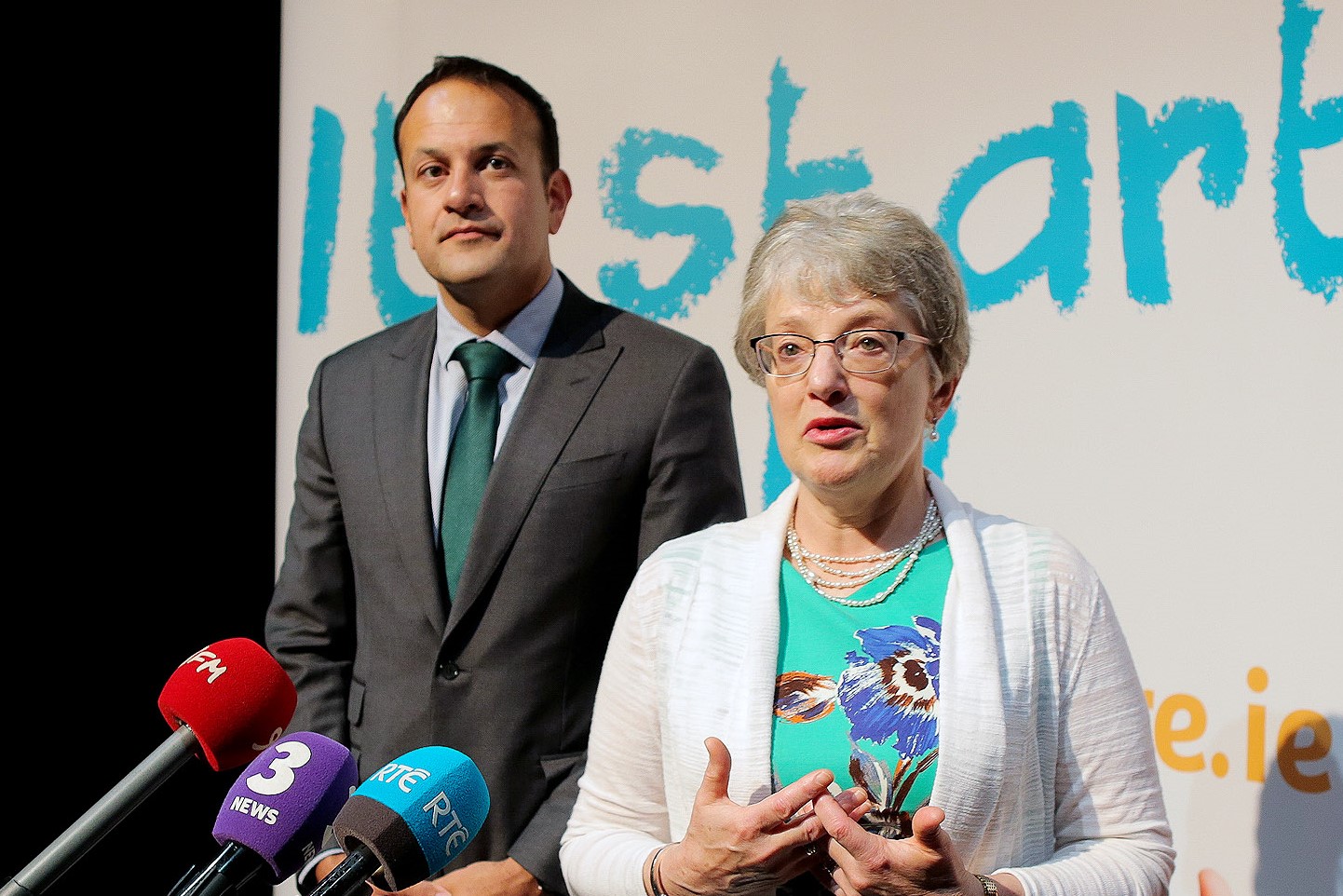
The careful planning of a blunt challenge to Pope Francis by Minister Katherine Zappone that bypassed the Archbishop of Dublin and went beyond Government policy has been revealed through a freedom of information request by the Sunday Independent.
Ms Zappone was the Government representative who greeted Pope Francis at Aras an Uachtarain on August 25 at the start of his visit to Ireland. She wrote to her advisers on August 18 that she wanted to tell him about Tuam, ask for an apology and insist the Vatican share in costs to excavate and re-bury the babies and grant access crucial church documents.
“So, [the] message is – will he: offer [an] apology, share in costs, provide access to relevant information,” she told her advisers.
Ms Zappone asked if she should press the Pontiff for a response. It was suggested she learn the Italian for “Is that a ‘yes’, Pope Francis?” Her advisers warned that looking for a commitment on something not yet sanctioned by Government was “risky”. The minister asked what role Dublin Archbishop Diarmuid Martin would have in her meeting with the Pontiff but advisers told her to focus on the Pope. “If there are issues with the Dublin Archbishop – then the Pope is his ‘boss’. We are going to the top,” said one adviser.
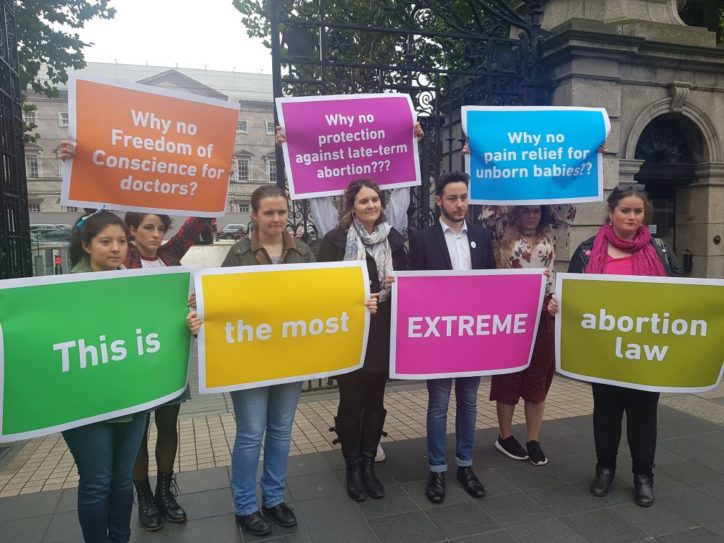
A Fianna Fáil TD has changed his mind about supporting abortion legislation going through the Oireachtas. Marc MacSharry had said after the referendum result that he would support the proposed legislation but he announced in the Dáil yesterday,“I am not sure that I can do so”.
His change of heart came “out of fear, quite frankly”. The Sligo-Leitrim TD said “I fear that this will become the contraceptive of choice for people down the line; not today, next week or even next year, but in time. Abortion will become something that is the norm rather than for the hard cases. That is a concern for me.”
The Minister for Health berated him in a scolding response from across the floor of the Dáil. “Unfortunately some people talking about the issue in this House are using language that gives an insight to a mindset that is worrying”, said the Minister.
Such talk showed a “lack of understanding of the very difficult decision-making process a woman goes through before accessing termination. To equate in any way termination to contraception shows a fundamental lack of respect for women. It also shows a fundamental lack of understanding about termination and contraception.”
Meanwhile, another Fianna Fáil TD Eamon Ó Cuív told the Minister he should correct the use of the term “pregnant woman” that appears in the Bill, because “we have various genders and transgender” and the term was out of line with other legislation.