

Under 18s should not be able to self-define their gender, according to a major new poll in the UK.
The survey of over 2,000 people found that a majority believe young people under 18 should not have the legal power to self-identify their gender. Just one in five thought they should.
The poll also found just five per cent would be pleased if their child wanted to officially change their gender. Four in ten (42 per cent) would not.
Incredibly, the poll also revealed significant support for those who want to self-define their race (32 per cent), their age (19 per cent) and even their species (ten per cent). Among young people, these figures were higher in every category.
Responding to the figures, Coalition for Marriage Chairman, Colin Hart, said: “These results show that the public is deeply concerned at the Government’s obsession with pushing transgenderism on all. There is after all nothing progressive with children who are so ashamed of their bodies that they think they must change gender, something that has risen at an alarming rate in recent years.”
He added that people recognise that children need to be protected from unnecessary puberty blockers and genital surgery.
Children of separated parents are more likely than those from intact families to have problems with their health, education and emotional wellbeing at age 13, a new ESRI report says.
The report draws on data from the Growing Up In Ireland longitudinal study, based on interviews with more than 7,400 young people and their families when the children were 13 years old in 2012, and when they were nine years old in 2007/08. It exposes considerable differences in childhood experiences and outcomes depending on family background.
Children who were growing up in one-parent families and those who came from families with lower levels of maternal education, were more likely than others to be classified as being at risk of socio-emotional and behavioural problems. Specifically, the report says, ‘Parental separation between 9 and 13 years of age was associated with double the chance of the 13-year-old being classified as being at risk of socio-emotional and behavioural problems (21% compared to 10% of those not experiencing parental separation)’.
The report was launched on Wednesday.
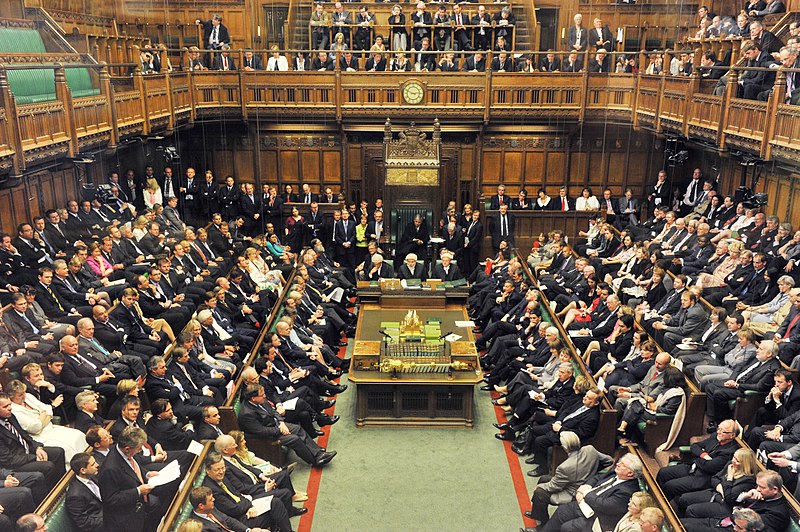
The majority of women in Northern Ireland believe that Westminster should not impose abortion laws on the North, a new poll from ComRes has revealed.
The polling showed that 64% of the general population in Northern Ireland agree that changing the law on this issue should be a decision for the people of Northern Ireland and their elected representatives with an even stronger majority of women, 66%, reject interference from Westminster.
Dawn McAvoy, of the Both Lives Matter organisation in Northern Ireland, said a Labour Party sponsored bill in the House of Commons to decriminalise abortion in the North is an attempt to “override devolution in Northern Ireland and to impose abortion laws on the Northern Irish people”.
“This polling clearly shows that this is not what the people of Northern Ireland, and in particular women, want,” she said.
“100,000 people in Northern Ireland are alive today because Northern Ireland did not accept the same abortion law that was introduced into Britain in 1967. We urge British MPs to respect the people of Northern Ireland and our elected representatives.”

The city of Atlanta has agreed to pay its former fire chief, Kelvin Cochran, $1.2 million compensation for wrongful dismissal. A court ruling had found that some of the city’s policies, restricting non-work speech, that led to his termination were unconstitutional.
Cochran wrote a 162-page devotional book on his personal time that briefly mentions his Christian views on sex and marriage. Atlanta Mayor Kasim Reed suspended Cochran for 30 days without pay and announced that he would have to complete “sensitivity training.” Reed then fired him, even though a city investigation concluded that he did not discriminate against anyone.
“The government can’t force its employees to get its permission before they engage in free speech. It also can’t fire them for exercising that First Amendment freedom, causing them to lose both their freedom and their livelihoods,” said ADF Senior Counsel Kevin Theriot, who argued before the court on behalf of Cochran last year. “We are very pleased that the city is compensating Chief Cochran as it should, and we hope this will serve as a deterrent to any government that would trample upon the constitutionally protected freedoms of its public servants.”
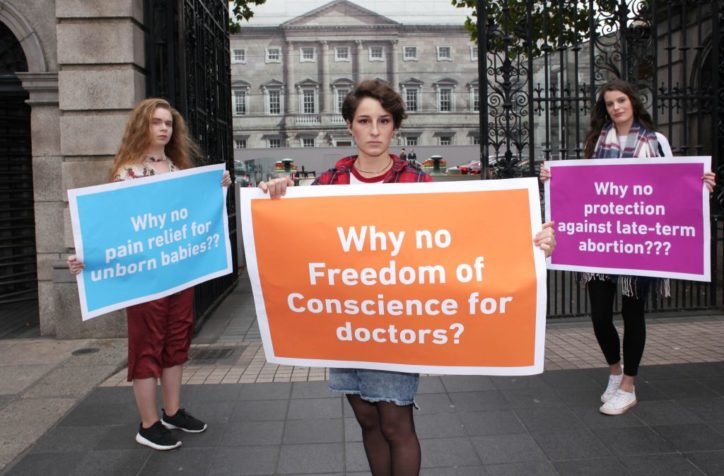
New poll findings by Amárach Research show 80% of respondents say doctors and healthcare workers should not be forced against their conscience to carry out abortions while 60% of respondents opposed tax-payer funding for abortion.
Commenting on the findings, Dr Ruth Cullen of the PLC said: “The Government’s abortion Bill contains no positive right to conscientious objection from having to perform abortions. If the Bill passes in its current form, doctors, nurses and midwives could be forced to carry out abortions regardless of their deeply held personal views on the issue. It’s clear from the poll findings that the public do not wish to see healthcare workers being compelled to act against their conscience.”
Dr Cullen said: “Another revealing finding in the poll is that by a slim majority of the public don’t believe doctors opposed to abortion should be forced to arrange for another doctor to carry out the procedure. This is a particularly encouraging result given that there has been virtually no public debate on the very real and serious concerns many GPs have at being forced by the Government to arrange for the abortion to take place if they seek opt outs from performing the procedure itself.
Commenting on the overall results of the poll, Dr Cullen said: “Simon Harris promised there would be ‘ample time’ after the referendum to scrutinise any proposed legislation but like so many other things he has completely reneged on his promise and is now railroading the Bill through the Dáil for fear the cracks in his proposals start to show. Minister Harris likes to portray his Bill as enjoying the overwhelming support of the public but it’s easy to see from today’s poll findings that this is simply not the case. He can pretend that the very real concerns of doctors and others don’t exist but I can assure him they will not go away until they are addressed, regardless of how long it takes.”

Women who have a chemically-induced abortion in the first nine weeks of pregnancy will be able to obtain abortion drugs directly from their GP or hospital doctor. This means they will not have to fill a prescription in a pharmacy. This will avert the need to have to produce a prescription in public.
Meanwhile, the option of contracting private clinics to provide an ultrasound service to women seeking an abortion, under proposed new legislation, is being considered.
However, doctors have queried how they will source the required expertise, given that there is a shortage of sonographers.
Dr Mike Thompson, a GP member of Start (Southern Taskgroup on Abortion and Reproductive Topics), said private clinics had not previously provided routine pregnancy scans, so it was “unclear how they can now offer a very specialised scanning service”.
A specialised service of early medical ultrasounds would be needed to ensure that a pregnancy is not gone beyond 63 days, the cut-off point for when abortion-inducing drugs could be administered.

In a stinging attack on the Catholic Church, President Higgins has questioned the existence of denominational education in Northern Ireland and the right of the Church to comment on relations between men and women.
In an interview with the Irish Examiner, he was asked about the position of the Catholic Church in Ireland has since he was first elected in 2011, especially in light of reports into Cloyne and the Tuam babies scandal.
“It has totally changed. You mention Cloyne: how could it ever be acceptable that you would have a separate legal system, that placed itself above the legal system of the State, in which the State is responsible to the people?” he asks.
“Secondly, in relation to the idea of conscience. If you are in fact going to respect conscience, how can you be absolutist in making statements about women and about relationships between men and women.
“In terms of the North, how can you say that you are genuinely in favour of things going forward in the North, when you are insisting that children be educated separately, on a denomination basis,” he says.
The President also took pride in wading into the debate over the death of Savita Halappanavar when he backed an inquiry into her death even though the Government was opposed to the idea. He named it as an instance where he ‘absolutely and deliberately’ knew he was overstepping the boundaries of what the Government thought should be his role.
“I’ll give you an example, like the case of Savita. Here is the choice facing me. I am in England, attending an event, and this has happened and I know that has affected women and people are very concerned. I carefully used my words that an inquiry should be sufficient to meet the reasonable expectations of her husband and should have consequences and proposals to ensure that something like this never happens again. I do remember people saying, people arguing archaic kind of thinking, saying this is something he shouldn’t be doing. It is something that I am absolutely convinced was the right thing to do. It is what the President, directly elected and exercising judgement, should do.”
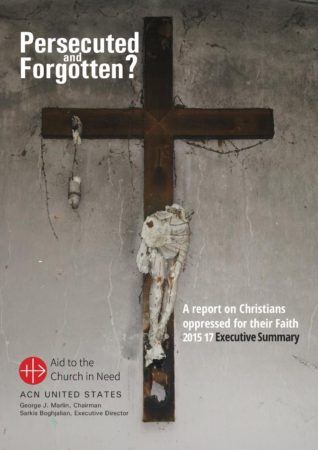
At the very minimum over three thousand Christians were killed for their faith in 2017 alone, although the true figure is probably far higher. The figures and the evidence for them were discussed in a report by an All-Party Parliamentary Group on International Freedom of Religion or Belief in the UK consisting of members of both the House of Commons and the House of Lords.
The report says that reported figures vary depending on how strictly you define a Christian, how you categorise the circumstances of their death, and how you count them.
Open Doors, a group that highlights persecution of Christians found that in the 12-month period ending October 2017, at least 3,066 Christians were killed for their faith.
Toward the middle of the scale, the International Institute for Religious Freedom, estimates between 4,000 and 6,000 Christians were killed for their faith in 2017. The institute argues that it often is difficult to determine with certainty whether a victim was a Christian, or if the killing was related to faith. As the aim is to estimate probable minimum and maximum numbers the numbers are somewhat larger than the bare minimum numbers of Open Doors.
At the high end of the scale, the Center for the Study of Global Christianity has estimated that 90,000 Christians were killed from mid-2016 to mid-2017 for religious motives. The figure is not based on an actual count but is declared “a calculated annual average over a 10-year period.” The number has its origins in an estimate for a ten-year period in the past that is averaged. The Center’s 2018 figure is a projection of that estimate into the present. The previous annual average over a 10-year period before 2010 was 100,000.
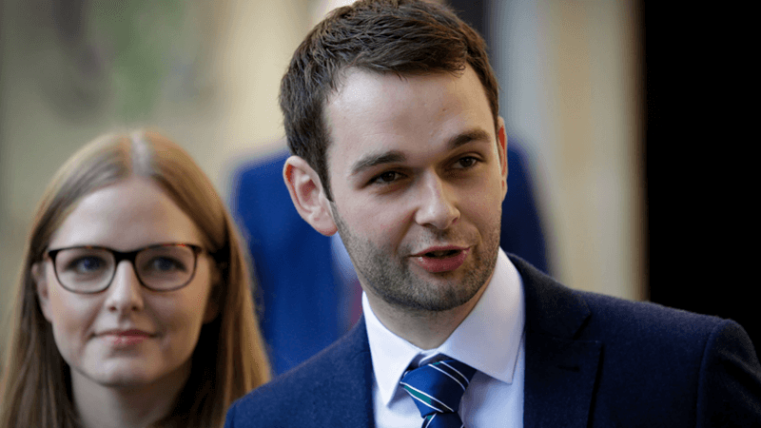
The Belfast bakery owners at the centre of the supreme court free speech ruling in the “gay cake” case have urged other Christians in similar situations to “take their stand”.
In the interview with the Christian Institute, Ashers’ general manager Daniel McArthur and his wife Amy McArthur admitted that the public nature of the case had been difficult, but say they have been comforted by the knowledge that they had done nothing wrong.
To other Christians who might be faced with a similar situation, Amy McArthur advised them “to not be afraid, to take your stand for God’s word because he is so faithful and he will bring you through it.”
She added: “The past four years has really strengthened my faith in God, his comfort and strength and peace — for that alone it would’ve been worth it.”
Daniel McArthur said: “This judgment carries so much weight because it guarantees free speech for Christians all over the UK. People ask you ‘was it worth it, going through all this?’ and I answer them ‘absolutely yes’. We knew we were doing what God wanted us to do and we believe we’ve been following his will.”
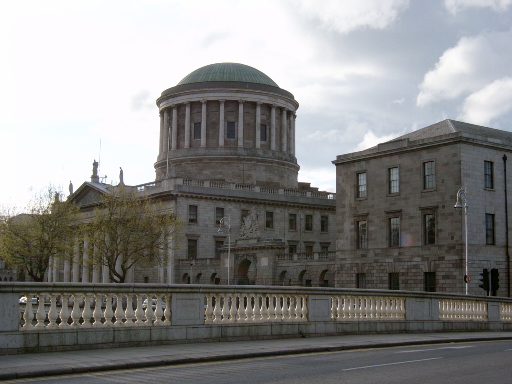
A leading member of the Medico-Legal Alliance has hinted that the country’s draft abortion law may face a legal challenge similar to the Asher’s Bakery freedom of conscience case.
Senior Counsel Ben Ó Floinn said it would be regrettable if such a challenge became necessary in order to secure a wide-ranging freedom of conscience for doctors who will not provide terminations.
Mr Ó Floinn told RTÉ News: “People campaigned (in advance of May’s referendum vote) on the basis of Freedom of Choice. Now that choice should be to allow a wide-ranging freedom of conscience to those whose consciences tell them they want no part in this.”
He said it would be ‘regrettable’ if a challenge similar to that in the Asher’s Bakery case became necessary in order to secure this freedom.