

There has been a “breakdown in respect for authority” and the “value of life”, the Tánaiste has said, as he spoke about the crash in Co Kildare in which five teenagers were killed. His comments on the value of life come despite his key role in deleting the protection for unborn life from the Constitution.
Simon Harris said there are deep societal issues which need to be examined, saying it is multifaceted and crosses social media, government, the criminal justice system and road safety issues.
“We are now seeing almost a breakdown of authority or any respect for authority in society. On occasion, we’re seeing a lack of respect for the value of your own life. We’re seeing a lack of respect and understanding of the value of human life, the lives of others.”
Five teenagers died when the car they were driving the wrong way down a motorway and collided head-on with another car.
Four members of the same family – three women and a seven-year-old boy – in the second car were seriously injured and remain in hospital.

In the 12 months to the end of April 2026, the headline figure is that the population of Ireland rose by 66,900 and stood at 5,525,600 people.
In addition, an estimated 110,600 immigrants entered the country which was the fifth successive 12-month period where over 100,000 people immigrated to Ireland.
At the same time, an estimated 62,500 people left the State.
Of those who left, 53% (32,900 people) were aged between 25 and 44 years, while 32% (19,900 people) were aged between 15 and 24 years.

The need to uphold freedom of religion and belief is urgent, according to a UN Special Rapporteur in a message to Aid to the Church in Need (ACN), a Catholic charity which helps persecuted Christians all over the world.
In a video message to ACN, Dr Nazila Ghanea said people in every corner of the world, “needlessly suffer, day in and day out, violations of their human rights and fundamental freedoms, purely and simply because of their religion or belief.”
Last Saturday marked the International Day Commemorating the Victims of Acts of Violence Based on Religion or Belief.
On the occasion, Dr Ghanea called for renewed commitment to protecting one of the world’s most fundamental human rights.
Her message closely reflected ACN’s own Article 18 Petition.
Inspired by Article 18 of the Universal Declaration of Human Rights, it calls on governments to respect, protect and promote every person’s right to freedom of thought, conscience and religion.

A Californian couple is suing a surrogate mother for $100,000 in damages after she refused to abort the child she was carrying for them, following the discovery of a serious heart condition.
The Los Angeles based couple had contracted McKenna West, a nurse in Alaska, to carry the child for them under a surrogacy contract worth $60,000
The agreement contained an abortion clause if complications arose during the pregnancy.
At approximately 20 weeks, the child was diagnosed with hypoplastic left heart syndrome, a rare congenital heart defect in which the left side of the heart does not develop properly.
Following the diagnosis, the commissioning couple asked West to have an abortion. She refused and subsequently travelled to Texas so she could give birth in a hospital that provides expert care for the child’s condition.
The couple are now seeking more than $100,000 from West for allegedly breaching their agreement. They are also pursuing unspecified additional damages over what their lawsuit describes as her “malicious, outrageous conduct.”
A custody dispute has also arisen between the so-called “intended parents” who commissioned the surrogacy, and the nurse who carried and gave birth to the child.
France has ordered life insurers to pay out to the families of those who consent to ‘assisted dying’, despite the risk of creating economic incentives that could pressurise vulnerable people into ending their lives.
A provision in new so-called ‘right to die’ laws, announced this week by Emmanuel Macron, stated that death insurance must cover policyholders who legally decide to end their own lives.
Crucially, the rule also applies to insurance policies taken out before the new law came into force.
This means insurers cannot use suicide exclusion clauses, which are common in many policies for the first 12 to 24 months, to refuse a payout after an assisted death.
France’s state council said the provision was to ensure that a patient’s decision to seek an assisted death had no financial consequences for the beneficiaries of their policy.
Opponents of the law, however, had warned that guaranteeing insurance payouts could give relatives a financial interest in a vulnerable person choosing assisted dying.
During the senate debate, critics warned of an “economic incentive to resort to assisted dying”. They cited the example of an elderly person who might be influenced by knowing their death would trigger a payout to their heirs.

The German bishops’ conference has said there has been a substantial increase in adult baptisms, even as the total number of baptisms declined.
The conference released statistics last week showing that in 2025, 2,650 adults and young adults aged 14 and over were baptized, a 28% increase from 2024.
However, overall the 109,002 baptisms in 2025 marked a decrease from 116,274 in 2024, due to declining infant baptisms which tracks a decline in the birthrate.
Other European countries have seen an increase in adult baptisms, too. In France, this year there were 21,386 adults and teenagers aged between 11 to 17 baptized during the Easter Vigil, an increase from 17,788 in 2025.
In Spain, in 2024 there were 13,323 non-infant baptisms – people over the age of seven – although there were 146,370 baptisms overall which was down from 152,426 the previous year.

The decline in faith is better represented as a gradual decline in the certainty of belief, rather than a fall in the number of believers, according to new research.
Ryan Burge, a professor of religious practice at the Danforth Center on Religion and Politics at Washington University in the USA examined new data from Pew’s Religious Landscape Study.
It shows young Americans are less certain God exists — but very few are becoming atheists.
It asks two questions: “Do you believe in God or a universal spirit?” and, “How certain are you about this belief?”
It shows not only that faith extends beyond convinced believers, but that disbelief is not nearly as firmly held as previously thought.
Moreover, a breakdown by age cohort shows that, while those “absolutely certain” in their belief declines with age, those who are “fairly certain” or “not too certain” increases. The figures for those born in the 1940s, from most certain to less certain faith, are 65pc/19pc/5pc/1pc, whereas for those born in the 2000s are 39pc/28pc/9pc/1pc.
Likewise, the corresponding figures for disbelief went from 4pc/4pc/1pc/1pc to 6pc/10pc/6pc/2pc.
A Finnish parliamentarian and a Lutheran Bishop have both been blocked from entering the UK following a disputed conviction for “hate speech” in Finland over the content of a Christian pamphlet.
Longstanding Christian politician Päivi Räsänen was due to give a talk in person this week about freedom of speech, at a religious freedom conference.
However, in July, Räsänen was informed that her Electronic Travel Authorisation (ETA) to the UK had been cancelled.
This followed the former Interior Minister’s controversial conviction for “hate speech” in March this year.
Courts ruled a booklet which she wrote for her church in 2004, expressing her Christian beliefs on marriage and sexuality, breached criminal law in its argument against same-sex relationships.
Lutheran Bishop Juhana Pohjola, who published the booklet, was also convicted of hate speech and was likewise blocked from entering the UK.
They have both appealed their cases to the European Court of Human Rights.
Räsänen expressed her shock that the UK blocked her, “a democratically elected politician in an allied European state, from entering the country”, describing her conviction as “unjust” and an “egregious case of state censorship” for “peacefully expressing her Christian views”.

Stay-at-home mothers are less likely to have experienced depression than all other women, according to a leading sociologist.
While abundant research has shown that married mothers are happier than other demographics of women, less work has been done on stay-at-home mothers specifically.
To examine that question, Stephen Cranney of the Institute for Family Studies looked at large US datasets on drug and emotional-health-related issues.
He found that 10% of stay-at-home mothers had experienced a major depressive episode in the past year.
By contrast, that figure rose to 15% for all other women.
Likewise, when looking at suicidality, he found that 5pc of stay-at-home mothers had suicidal thoughts in the past year versus 8% for their non-homemaker, female counterparts.
Moreover, as mental health is not simply the absence of problems, Cranney cited work of a colleague from 2022 that showed stay-at-home mothers are at least as happy as employed mothers.
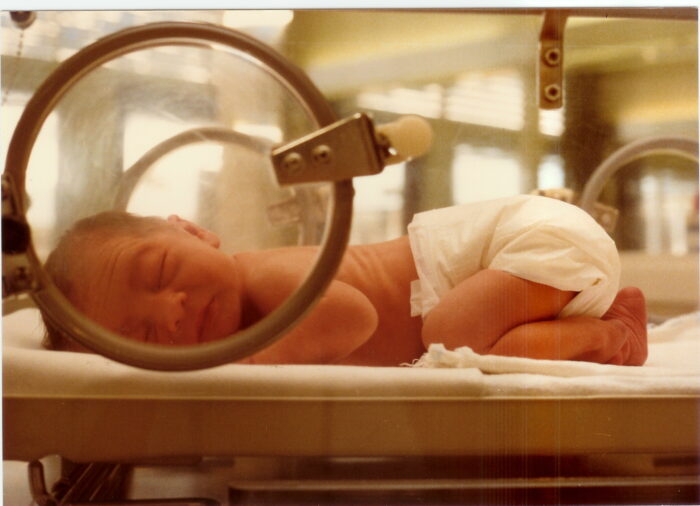
A surrogate baby marked for abortion by the couple who commissioned it was given a reprieve after a judge agreed with the woman carrying the child and ordered life-saving care instead.
The child had been diagnosed with a heart defect in utero, prompting the commissioning couple to order that the pregnancy be aborted, in accord with the terms of the surrogacy contract.
However, the surrogate mother, McKenna West, a nurse from Alaska, preferred that post-birth surgery should be performed on the child – whom she has named Gabriel.
She wished to give birth in a hospital in Texas with a high success rate treating infants with the same condition.
The couple, however, filed legal proceedings in California to establish their parental rights over the child, and to compel Ms West give birth in the state.
On Tuesday, a judge in Dallas agreed with Ms West and ordered that the child receive life-sustaining treatment.
Ms West gave birth in the Texas hospital on Wednesday and the child is now receiving stabilising care and is scheduled to undergo surgery.