
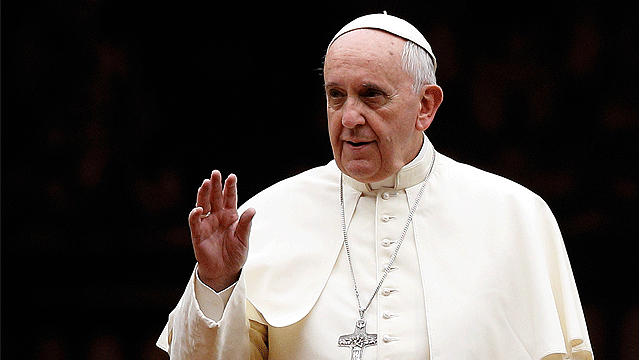
Pope Francis has said that while the Church respects everyone, including the divorced and separated, it must not be forgotten that the ideal is the united family.
Francis stressed this during his weekly General Audience, Wednesday morning, Aug. 29, held in St. Peter’s Square, as he reflected on his recent visit to Ireland for the World Meeting of Families (WMOF) in Dublin. The Pope said the event was prophetic in showcasing families engaged in the Gospel way of marriage and family life. “We forget so many families that go on with faithfulness and courage. We forget it because today it is fashionable to talk about divorces and separations and this is a bad thing. I respect everything, but this is not ideal, the ideal is not separation, but a united family!”
The thousands of families – spouses, grandparents, children – gathered in Dublin, with all the variety of their languages, cultures and experiences, he noted, have been “an eloquent sign of the beauty of God’s dream for the entire human family.” He continued: “In the mystery of his love, He calls families to participate in this dream and make the world a house where nobody is alone, nobody is unwanted, nobody is excluded.”

An unmarried mother has won a landmark UK Supreme Court case which could allow her to claim a Widowed Parent’s Allowance (WPA) even though she was never married. Siobhan McLaughlin from County Antrim, had lived with her partner for 23 years, with whom she had four children, and after his death she was denied money that her children would have been entitled to had she been married. The Supreme Court Justices found that the legislation which governs the WPA was incompatible with human rights law, as it “precludes any entitlement to WPA by a surviving unmarried partner”. The Supreme Court by itself cannot change the law but it puts pressure on the UK’s legislatures to do so to ensure that it is human rights compliant, according to the Court’s understanding of those rights.
Reacting to the news on Thursday, Ms McLaughlin described the judgment as “just surreal”.
“It is just fantastic for all those children that have been recognised now,” she said. “It wasn’t ever about me, it was always to do with the parent’s allowance part of it.” When asked what it meant for people “in her position”, Ms McLaughlin replied: “Hopefully they will recognise that they are just as worthy as children born into wedlock.”

A “worryingly low” number of women are taking up employment, the National Recruitment Federation (NRF) has said. In a pre-budget submission, the representative body for the State’s recruitment industry warned the rapid decline in unemployment poses “significant challenges for the economy”, and the low participation rates of women over the age of 35 – when most women have become mothers – needed to be addressed.
The lobby group argued that the high cost of childcare, and aspects of the social welfare system, were causing women to not go back to work, and that without action, economic progress would suffer as a result. CSO data show that only small minority of couples wish to put their children into daycare.
“Proper investment in a structured childcare solution is needed, and, in terms of the cost of subsidised childcare, this is expenditure that Government can’t afford not to make, if we are to resource our labour market needs and drive economic progress,” said Mr Farrelly.
The lobby group also argued the so-called “granny grant” – an initiative to offer €1,000 to grandparents who help with childcare – is an inadequate response for an issue requiring “serious investment”.

China’s communists have launched a new crackdown on religious faith with party members being threatened with ‘ thought education’ unless they shed their beliefs.
President Xi Jinping’s increased crontrol of party members begun six years ago when he took office. Xi has accrued more power than any of his immediate predecessors and has intensified efforts to ensure cadres are ‘loyal, disciplined, and law-abiding’. A new clause in the updated discipline rules takes aim at party members who are religious. While the country’s constitution guarantees freedom of religion the party is officially atheist and party members are supposed to be too.
“Party members who have religious belief should have strengthened thought education. If they still don’t change after help and education from the party organisation, they should be encouraged to leave the party,” the new rules say. Those who attend “activities that use religion for incitement” will be expelled, according to the rules.
More than one million people tuned in to watch at least some of Sunday’s Papal Mass on RTÉ, figures released on Monday show. TV viewing data show that over 1.8 million viewers tuned in to RTÉ’s special live television coverage of Pope Francis in Ireland across the entire weekend.
An average of 535,000 viewers watched the full Papal Mass on RTÉ One television in the Republic of Ireland alone, while a huge audience of 1.1million viewers tuned in at some point during the broadcast.
On RTÉ2, the Festival of Families concert event in Croke Park on Saturday evening saw 379,000 viewers watch the full four hour programme, with a peak of 570,000 viewers all watching at one stage.
Besides those who viewed Sunday’s mass at the Phoenix Park directly on TV, there was another 300,000 streams of RTÉ’s online platforms which attracted audiences in 159 different countries, including Iran, Papua New Guinea and Swaziland. RTÉ also shared footage of the visit with more than 75 broadcasters worldwide.

Women in England will be allowed to take an abortion drug at home, under a new government plan due to take effect before the end of the year.
The Society for the Protection of Unborn Children, however, said the move “further trivialises abortion”.
“The abortion pill puts women through a terrible emotional and physical ordeal,” a spokesperson said. “The determination of the abortion industry to push women to undergo this in their own home with no real medical supervision illustrates their cavalier attitude when it comes to the well-being of women.”
Currently, women ending a pregnancy in its first 10 weeks must take two pills at an abortion clinic, 24 to 48 hours apart. After taking the second dose, they leave the abortion clinic and wait for their unborn child to miscarry. Sometimes, this occurs while the women are on their journey home.
Under the new plans, which will bring England into line with Scotland and Wales, the second pill can be taken at home.
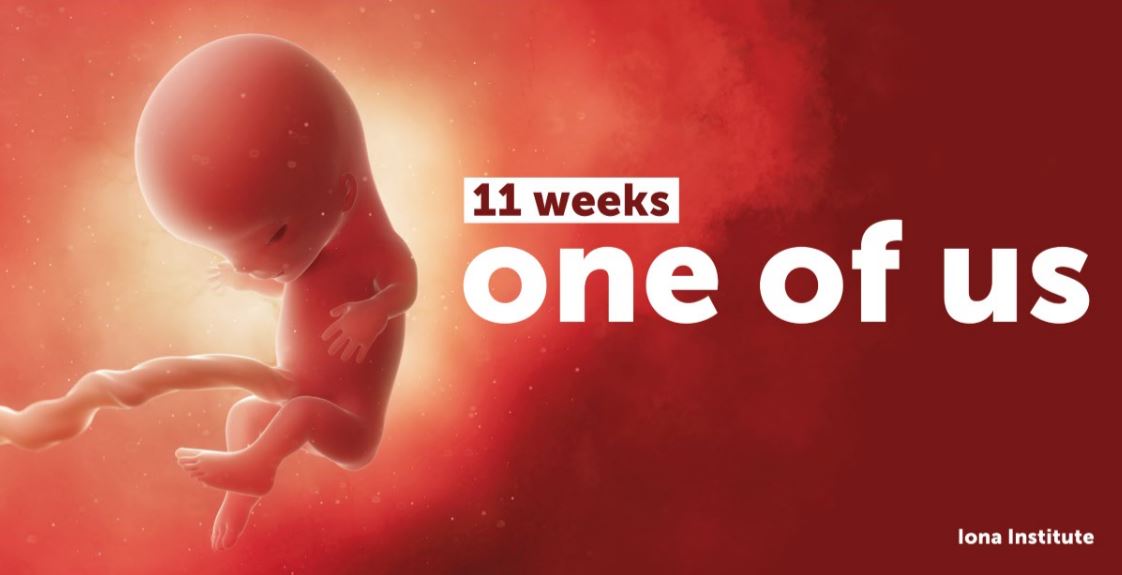
Abortion and neglect of the elderly were condemned by Pope Francis in his homily at mass at the Phoenix Park on Sunday. Speaking to a crowd of several hundred thousand people, with many more watching on television, the pontiff asked people to acknowledge the difficulty and reluctance they feel when it comes to doing what is right, especially for weaker and vulnerable people in society.
“How inconvenient to protect the rights of the most vulnerable, the unborn or the elderly, who seem to impinge upon our own sense of freedom”, he said.

The Taoiseach welcomed Pope Francis to the country in a diplomatic reception at Dublin Castle on Saturday where both set out the outlines of Church-State cooperation. He also criticised the Church over the abuse scandals.The Pope in turn had words to say about Ireland’s current trajectory away from Christianity and toward a consumerist, materialistic society.
Mr Varadkar told the Pope his visit had prompted reflection “on the relationship between Ireland and the Roman Catholic Church, a faith brought to Ireland centuries ago.” He noted the ongoing contribution of the Church to providing a social net for the poor, especially during the decades when the State provided none at all. He also mentioned where that shared cooperation had failed: “Magdalene Laundries, Mother and Baby Homes, industrial schools, illegal adoptions and clerical child abuse are stains on our State, our society and also the Catholic Church. Wounds are still open and there is much to be done to bring about justice and truth and healing for victims and survivors.”
He then asked the Pope to use his “office and influence to ensure this is done here in Ireland and across the World.”
In his response, the Pope said he was very conscious of those women and children and orphans who in the past endured particularly difficult situations. “With regard to the most vulnerable, I cannot fail to acknowledge the grave scandal caused in Ireland by the abuse of young people by members of the Church charged with responsibility for their protection and education.”
Francis said that true peace “requires constant conversion on our part, as the source of those spiritual resources needed to build a society of authentic solidarity, justice and service of the common good. Without that spiritual foundation, our ideal of a global family of nations risks becoming no more than another empty platitude.” He continued: “Can we say that the goal of creating economic or financial prosperity leads of itself to a more just and equitable social order? Or could it be that the growth of a materialistic ‘throwaway culture’ has in fact made us increasingly indifferent to the poor and to the most defenceless members of our human family, including the unborn, deprived of the very right to life?”

‘Day-care is too expensive, Children’s Minister, Katherine Zappone has said. Minister Zappone wants State subsidies to day-care centres increased even though CSO data show only a small minority of parents want to put their children into full-time day-care. Minister Zappone was responding to a new survey which shows the high cost of full-time day-care.
A Newstalk survey found that the average national monthly cost is now €745. That is an increase of €40 from back in 2013.
The county with the highest costs is Dublin, which has now climbed to an average of €1,047 per month – an €84 increase from five years ago – when Newstalk conducted a similar survey. The county with the lowest costs is Longford with an average monthly charge of €650.
Speaking to Newstalk Breakfast, Minister Zappone said: “It’s too much for parents to pay, I accept that.”
Politicians in California are pushing a bill to compel all of the state’s public universities to dispense abortion pills to students.
At least one of California’s university systems, California State University, is reluctant to participate, and has rightfully expressed concern that its campuses are ill-equipped to deal with the risks of a medication abortion. Those risks are not negligible, nor are they hearsay. According to the US Federal Drigs Authority, at least 22 women have died after taking the RU-486 regimen, and many others have had serious complications, with nearly 600 women experiencing such severe blood loss that they required transfusions.
Pro-life advocates have reacted with horror to the news. Lila Rose, president and founder of the national pro-life organization Live Action, said the bill sends a demeaning message to female students that the only assistance their universities are willing to offer them if they become pregnant is abortion. It also flies in the face of California’s own progressive ideals, she said, by telling young women that the price for staying in school is to end the lives of their own babies.