

In a sign of goodwill, social media giant, Twitter, have created a special emblem to honour Pope Francis’ visit to Ireland that users can add to their posts. The emotion-conveying-image or emoji for short consists of the smiling face of the pope against an Irish flag backdrop. It can be generated under a number of hashtags including #PopeinIreland and will be launched on Tuesday.
Pope Francis, an active social media user with more than 17.7 million followers, is no stranger to his image being used for emoji purposes. Twitter has previously unveiled similar emoticons to mark his papal visits to the United States and Latin America.

Syrian man who came to Ireland in 2015 has been refused family reunification with his wife and sons because his marriage is viewed as polygamous under Irish law. The man divorced his first wife, but the divorce papers were not finalised before he married his second wife. He says that he is ‘completely against’ polygamy.
A spokesman for the Department of Justice said the Minister was unable to comment on Mr Jazmati’s case but added that the Supreme Court’s view is clear. A 2017 judgement found that only the first marriage of a Lebanese man with two wives was valid. This ruling “clearly established that recognition of an actually polygamous marriage ‘would be contrary to a fundamental constitutional principle and therefore contrary to public policy’.
“Therefore it not possible for the State to recognise any second or subsequent marriages entered into while the marriage to a first spouse is in being, and considered valid under Irish law.”
According The Irish Times, had Mr Jazmati sought asylum in the United Kingdom he may not have faced problems in reuniting with his family. While polygamy is illegal in the UK, as long as the marriage is recognised in the country where it took place and properly executed according to the laws of that country, the marriage is valid and the spouse is entitled to be reunited with one wife. The application is refused if the spouse applies for a second wife to enter the country. Similar rules also apply in Belgium, Finland, Germany, the Netherlands and Norway.
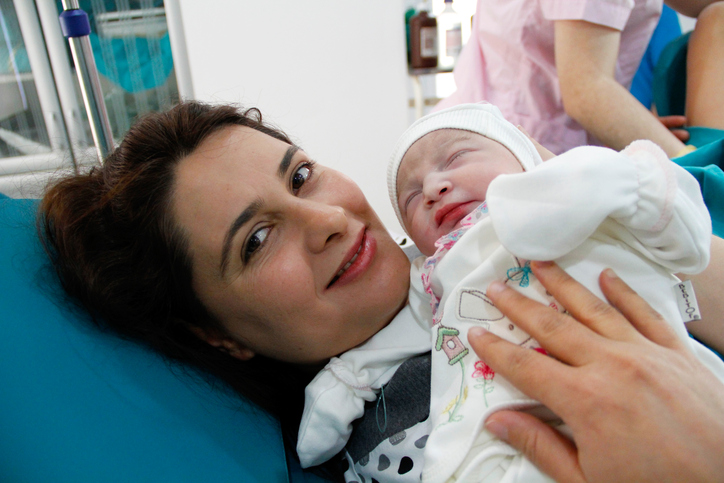
An op-ed in a state-run newspaper titled “Giving birth is a family matter and a national issue too” is the latest to encourage couples to have more children, and call for official action to enable young people to start families.
The full-page column was published in the overseas edition of the People’s Daily, mouthpiece of the Chinese Communist Party. It warned that “the impact of low birth rates on the economy and society has begun to show.”
The piece comes as the government revealed a new official postage stamp, which seems to hint that it may drop the remaining restrictions on the number of children people can have.
The one child policy was expanded to a two child policy in 2015 resulting in an immediate increase in births the following year. The jump was short lived however as 2017 witnessed a decrease in the number of births.

Millennials are now far less likely to count a close family member such as a brother or sister among their best friends, according to a new study.
Greater numbers going to university, as well as leaving home to live in large cities, means family ties are being weakened, contributing to a “growing problem of loneliness among” current 20-somethings, the report by the Intergenerational Foundation concluded.
The research compared survey data from those in their 20s in 2015, 2005 and 1995, indicating that overall well-being for this age-group has declined by 10pc over the past two decades.
The report said social media enabling young people to communicate more with their friends, at the expense of their family, may also be contributing to the slump in in-family friendships.
Based on data from the British Household Panel Survey, the study found that in 2015 millennials were 80.9pc less likely to have a family member as one of their three closest friends compared with 1995, and 55.2pc less likely compared with 2005.
However, despite the connecting power of technologies such as Facebook and Instagram, levels of close friendship overall have declined by more than 6pc in the past 10 years.
The experts said this indicated that even though young people were spending large amounts of time online, they were not necessarily using this time to form meaningful friendships.
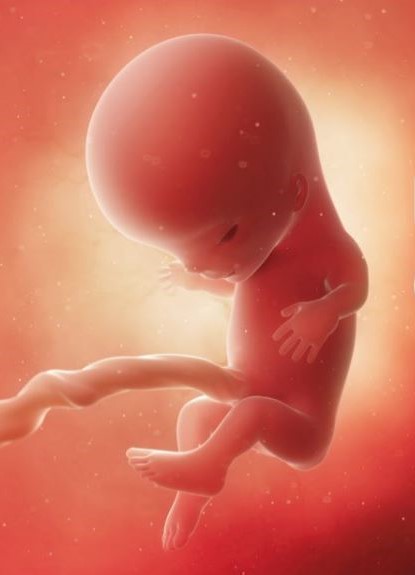
Argentina’s senate has rejected a bill which would have legalised abortion without restriction in the first 14 weeks of pregnancy. After the vote, pro-choice campaigners protested in the streets, starting fires and lobbing missiles at police.
Currently abortion is allowed in Argentina in cases of rape, or if the ‘mother’s health’ is in danger. This bill which represented a further expansion of the abortion law was rejected by a vote of 38 to 31, with the chamber’s 30 female senators evenly split on the issue.
Anti-abortion activists responded with jubilation. “It’s a joy to see that our society can be based on such an important principle as the defence of the most defenceless, the child,” said one.
The Pro Life Campaign in Ireland has welcomed the vote. PLC spokesperson, Cora Sherlock said: “There’s one marked difference between the abortion debate in Argentina and the recent one in Ireland. Thankfully the lies that were repeatedly told by many abortion supporters during the referendum debate in Ireland didn’t pervade the debate in Argentina to the same extent. The evidence of the negative after-effects of abortion on women and the fact that abortion kills an innocent unborn baby clearly resonated during the public debate in Argentina in recent weeks. The scaremongering and deep seated bias from large sections of the media didn’t win out on this occasion. That’s a great result for mums and their unborn babies and the right to life which is being disregarded in so many places at present.”
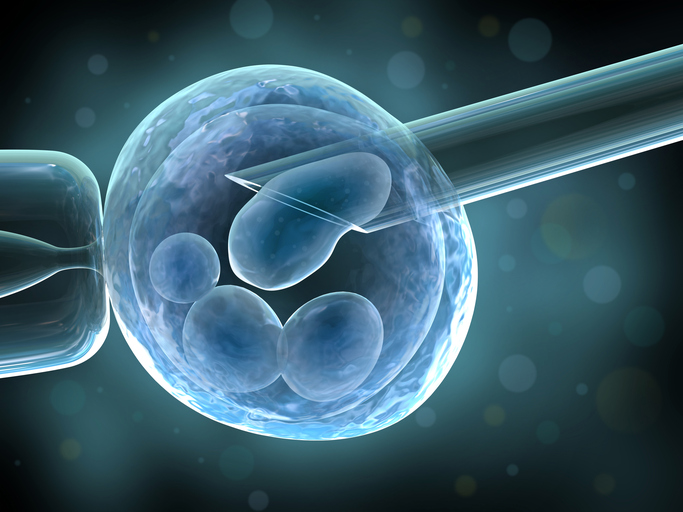
Egg freezing brings no help to 90 per cent of women who opt for it, with the vast majority leaving it too late, research suggests.
Less than one in three of those opting for egg freezing do so before the age of 35, despite the fact a lower age is “the highest discriminating factor for success,” obstetricians said.
Separate research shows that a paltry nine per cent of women who underwent the process for “social reasons” – such as the lack of partner, or career pressures – ended up returning to use their eggs. The Royal College of Obstetricians and Gynaecologists urged caution for women considering freezing their eggs for such reasons.

Abortion will be available to women from the North of Ireland once the Republic initiates its radical abortion regime, the Minister for Health, Simon Harris, has promised.
Speaking at an event in Belfast on Tuesday night, Mr Harris said that he thinks the law up there should be changed to allow for widespread abortion but, in the meantime, women will be welcome to travel across the border to abort their unborn children in clinics and GP surgeries in the South. “Whilst I respect the issue of abortion laws in Northern Ireland is a matter for public representatives in Northern Ireland, I really hope this is addressed in the near future,” he said.
“In the meantime, I intend to ensure women from Northern Ireland can access such services in the Republic, just like they can access other health services here,” he added.

Higher education institutions receiving public funding will have to provide sex education classes to tackle the issue of consent, sexual harassment and sexual assault on campuses, the Government has said. Minister of State for higher education Mary Mitchell O’Connor said she is considering making the classes compulsory in all Irish colleges.
She was speaking at the launch of research that showed that more than two-thirds of students do not think 28 standard drinks makes a person too drunk to give sexual consent. It also found high levels of sexual hostility or crude gender harassment. Ms Mitchell O’Connor said she was very surprised and troubled by the results and added “it is time” to examine how workshops on sexual consent could be made compulsory in Irish universities and Institutes of Technology.
“I believe it is timely and appropriate to formulate a standard of institutional responsibility, to address sexual harassment and assault,” she said.

Health Minister, Simon Harris launched an astonishing attack on a Catholic Bishop over the weekend for daring to defend Church teaching on love, marriage and contraception. The Bishop of Elphin, Kevin Doran, had spoken at a conference commemorating the anniversary of the 1968 papal encyclical Humanae Vitaewhen the Minister tweeted his 48,800 followers: “Please just make it stop!”
At the conference, Bishop Doran had said the principles of Humanae Vitae have been ignored for too long and need to be presented in a fresh way. He continued: “As a Church, we probably have not lived up to that demand. It needs to be presented in contemporary language in an appropriate context. There is undoubtedly a place in schools for an appropriate presentation of the Church’s teachings on human sexuality. I think we have, again, problems to address there. Not least, having a very good quality, Catholic inspired programme for relationship and sexuality.”
Bishop Doran also said it was “lopsided” to regard marriage as “simply a loving relationship” in which procreation was regarded as “an optional extra”.
Responding to the bishop’s speech in a tweet on Sunday, Minister for Health Simon Harris wrote: “Please just make it stop! Increasing access to & availability of contraception is and will remain public health policy. Religion plays an important role for many on an individual basis – but it will not determine health and social policy in our country any more. Please get that.”
Senator Rónán Mullen responded to the Minister, telling him, “you sound shrill and intolerant. Let Kevin Doran and others try to persuade people according to their values and you make your own arguments. You should be able to do your job without belittling folk”.

Boys close to their mothers are less likely to have mental health problems while daughters close to their fathers enjoy a similar lift in their self-esteem and confidence according to just published research.
The study by the Marriage Foundation concluded that boys and girls who are close to their parent of the opposite sex fare better at coping with teenage life.
Specifically, boys deemed ‘extremely close’ to their mothers at 14 are 41 per cent less likely to have mental health problems, the research found. Girls close to their fathers are 44 per cent less likely to suffer emotional problems or have trouble with their peers.
Moreover, the study reported that while boys are happier when their parents are married, girls are more reassured by their parents demonstrating a high-quality relationship.
The analysis, which uses Millennium Cohort Study data from 11,000 mothers, found that the biggest factor affecting teenage mental health was family breakdown.
Harry Benson, research director of Marriage Foundation, who co-authored the study with Professor Steve McKay from the University of Lincoln, said: ‘Our analysis shows once again that family breakdown remains the number one driver of teenage mental health problems.