

Members of the Oireachtas committee reviewing the recommendations of the Citizens’ Assembly on abortion have expressed doubt as to whether the group can deliver an agreed set of recommendations, with some believing that up to three differing reports could result from the hearings.
One committee member said that in the meetings that had already taken place it was clear that agreement on a final report could be “impossible”.
“Some people want to tinker around the edges and do very little, some people want the type of change that goes beyond even the recommendations of the citizen’s assembly,” she said.
“There are those of us in the middle that want to move this issue along and reach agreement but I think that is going to prove extremely difficult.” Politicians on the committee now believe there will be a majority report along with two minority reports, one from those with an anti-abortion stance and one from those with a pro-choice stance.
The Pro Life Campaign has said that comments about the 8th Amendment by the Master of the National Maternity Hospital ignore the fact that introducing abortion on “health” grounds would “open the door to abortion on request”. Dr. Rhona Mahony had told a Labour Party Conference that the pro-life amendment to the Constitution should be repealed “for a variety of reasons relating to women’s health”.
PLC spokesperson Cora Sherlock said: “It is never surprising to hear that the removal of the 8th Amendment has been discussed at a Labour Party Conference. The Labour Party has consistently campaigned for the introduction of abortion on request in Ireland, most recently when they advocated an abortion regime “fully in line” with the 1967 Abortion Act, which introduced abortion into England and Wales. That Act has led to a situation where abortion is legal for any reason up to 24 weeks, and legal up to birth if the baby in the womb is diagnosed with any disability. The clear lesson from countries like the UK is that legalising abortion on “health” grounds will eventually lead to abortion on request. Even when terms like “serious risk to health” are used, it doesn’t change the practical legal outcome.”

The Brothers of Charity in Belgium has refused a Vatican order to bar euthanasia in its psychiatric hospitals and asked for “dialogue” about its view that helping someone to die is compatible with Catholic doctrine.
Raf De Rycke, head of the province’s board of directors, said the Belgian province adopted its pro-euthanasia stance last March with respect for life in mind and not only thinking of patient autonomy. “This view was developed with the best possible care in mind,” he said.
It was ready to maintain “dialogue and consultation” with the Vatican, which gave it until Monday 11 September to revoke the decision. The three brothers on the 14-member board faced possible expulsion from the order if they did not comply.
Brother René Stockman, the order’s Rome-based global head, told the Flemish church news service Kerknet that a planned consultation had already failed and he would be ready for dialogue only “if it’s about barring euthanasia, and not about finding a modus vivendi”.
Axel Liégeois, ethicist for the Belgian chapter, said the Vatican approached the issue strictly on deontological terms, a mode of ethical analysis associated mainly with Immanuel Kant that considers the morality of actions through an objective, rationalist viewpoint. “But there is another widely accepted tradition within the Church, namely to approach ethical challenges proportionally,” he said. “On the basis of that and other considerations, we dare to say that our vision is Catholic.”
De Rycke said the decision to allow euthanasia in the order’s hospitals “was necessary in order to take our patients seriously when they express a wish to die. You can’t enter into a discussion about the end of life if you say right away what the outcome must be.”
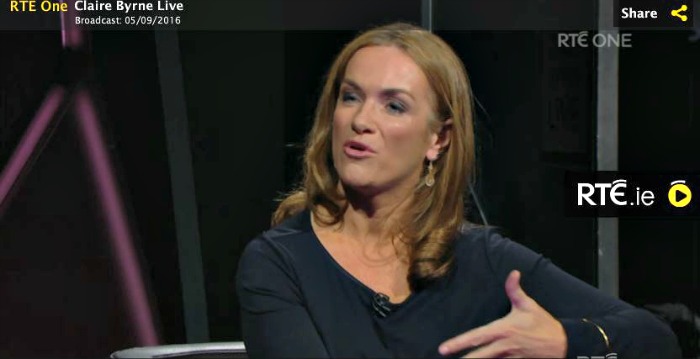
Dr Rhona Mahony, the Master of the National Maternity Hospital at Holles Street has told a Labour Party gathering in Kildare that the pro-life amendment should be repealed “for a variety of reasons relating to women’s health”. In Britain the ‘health’ ground accounts for the vast majority of that country’s almost 200,000 abortions annually.
She continued: “We have in Ireland terminations only when there is a substantial risk to the life of the mother that can be removed only by terminating the pregnancy,” she said. This poses difficulties, she said, because doctors are making decisions based on risk.
“This poses great difficulties prior to foetal viability because we are making decisions based on risk, trying to quantify a risk and also in some cases we have to wait until a woman is sick enough to qualify. In some cases, that is medical roulette”.
Ms Mahony said she was unhappy with her patients travelling to Britain for abortions. She said the current law did not allow her to care for them once they chose that option and travel of itself was stressful and risky.

The United Nations Committee on the Rights of Persons with Disabilities has recommended that the UK change its abortion law so that selective abortion on the grounds of foetal impairment would be outlawed. It also expressed concern about end of life matters and affirmed both that the right to life is absolute and persons with disabilities should always be treated equally and not be perceived as lacking “a good and decent life”.
Concerning unborn persons with disabilities, the statement of Concluding Observations said: “The Committee is concerned about perceptions in society stigmatizing persons with disabilities as living a life of less value and the termination of pregnancy at any stage on the basis of foetal impairment. The Committee recommends that the State party changes abortion law accordingly. Women’s rights to reproductive and sexual autonomy should be respected without legalizing selective abortions on ground of foetus deficiency.”
Regarding end-of-life matters, the statement said: “The Committee observes with concern the substituted decision-making in matters of termination or withdrawal of life-sustaining treatment and care that is inconsistent with the right to life of persons with disabilities as equal and contributing members of society. The Committee recalls that the right to life is absolute from which no derogations are permitted and recommends that the State party adopt a plan of action aimed at eliminating perceptions towards persons with disabilities as not having “a good and decent life”, but rather recognising persons with disabilities as equal persons and part of the diversity of humankind, and ensure access to life-sustaining treatment and/or care.”
http://tbinternet.ohchr.org/Treaties/CRPD/Shared%20Documents/GBR/CRPD_C_GBR_CO_1_28817_E.docx

While women have proved they can be the main breadwinner in a marriage, and men can be the main home-maker new research out of the University of Illinois finds that couples who go against the age-old gender norms are actually at a higher risk of damaging their psychological well-being.
Karen Kramer and Sunjin Pak of the University of Illinois examined data on nearly 1,500 men and 1,800 women, aged between 52 and 60, who had participated in theUS National Longitudinal Surveys of Youth. They found that men’s well-being decreased once they had left the workforce to tend to household matters, while the inverse wasn’t true for women. In fact, their findings showed that women who became the breadwinner of their family reported more symptoms of depression.
“We observed a statistically significant and substantial difference in depressive symptoms between men and women in our study,” said Kramer, who is a professor of human development and family studies. “The results supported the overarching hypothesis: Well-being was lower for mothers and fathers who violated gendered expectations about the division of paid labor, and higher for parents who conformed to these expectations.”
Even among the more egalitarian-minded couples, differences arose. Women in that subgroup experienced better mental health when their wages and share of the family’s income increased. However, regardless of their beliefs, men’s mental health took a hit when their earnings as a proportion of the family income shrank – suggesting perhaps that “work identity and (the) traditional role of primary earner are still critical for men, even when they have a more egalitarian gender ideology,” the researchers wrote.

Australia’s postal vote on same-sex marriage will go ahead this month after the High Court dismissed a challenge against it. The court handed down its decision 24 hours after submissions closed following a two day hearing. Same-sex marriage advocates had launched two cases, that were heard simulatenously, in a bid to stop the vote. Ballots will now be sent out from next week and all votes must be returned by November 7. The result will be announced on November 15.
Liberal Senator Eric Abetz, a vocal opponent to legalising gay marriage, welcomed the court’s decision. He said the vote would allow “forgotten” Australians to have their say despite “elites” trying to stifle democracy.
“Following the High Court case brought by self-appointed elites trying to stifle the Australian people being thrown out, I am pleased that all Australians will have their say on marriage,” Senator Abetz said in a statement posted to social media. “This case was hypocrisy writ-large from the left like Andrew Wilkie who used the exact same process to extract funding from the Gillard/Brown Government. Democracy is an infinite good and political elites should never seek to stand in the way of the people having their say. This plebiscite will give all Australians, especially the forgotten people who are concerned about the consequences for free speech, freedom of religion and parental choice, to have their say.”
Opposition leader Tony Abbott has taken aim at Labour party leader Bill Shorten, accusing him of “elitist bullying” after he gave a statement saying he would legislate same-sex marriage regardless of the people’s vote. This could be done as the result of the vote will not be binding on parliament “Shorten has just said that he’ll legislate SSM regardless of the people’s vote”, Abbott tweeted. “This is the kind of elitist bullying that people so dislike and are rightly concerned to reject.”
Twenty-seven babies over a 17-year period who survived abortions were left to die without any medical care, the State Parliament of Western Australia (WA) has been told. Replying on behalf of Health Minister Roger Cook, Parliamentary Secretary Alanna Clohesy made the admission in response to a question from a Liberal Party Member, Nick Goiran, who wants a parliamentary inquiry into abortion.Twenty-one of the babies were 20 weeks gestation or more.
The admission came as the Queensland parliament considered a bill to totally decriminalise abortion in the State. Latest figures for WA show around 8,000 unborn children are aborted each year. Based on the WA and Queensland statistics, a dozen or more children could be born alive each year only to die after struggling for breath. Nick Goiran’s campaigning since 2010 has revealed that children have been aborted late term (post 20 weeks) for disabilities including dwarfism, cleft palate and Down syndrome, contravening the State’s laws only allowing abortion post 20 weeks for “serious disabilities” or significant medical conditions affecting the mother.
A spokesperson for pro-life organization, Emily’s Voice, said, “The children received no medical care or comfort because the mothers, the medical profession and society demanded dead children. The Defence of Human Life in WA has organised a petition demanding an inquiry, and we encourage supporters in the West to add their names in opposition to this crime against defenceless children.”