President George Vella of Malta has told people close to him he is prepared to resign if parliament approves a sweeping liberalisation of abortion law proposed by the government.
The bill is currently going through a second reading in parliament but the wording could still be amended at the committee stage in the coming days.
Any bill needs to be signed by the president before it becomes law. If Vella resigns, he would be the first president in history to do so.
Parliament will likely take a vote on the bill by December 19, before the Christmas recess.
Vella, who is a doctor by profession, has been steadfast in his stance against abortion and, as president, he publicly insisted he would resign if parliament passed an abortion bill.
When, in May last year, former independent MP Marlene Farrugia tabled a private member’s bill to decriminalise abortion, Vella told Net News he opposed abortion without exceptions because there were “no half measures to murder”.
“You have either killed or not killed, there can be no half-death. I’m very clear, there are no ifs and buts,” he said at the time.
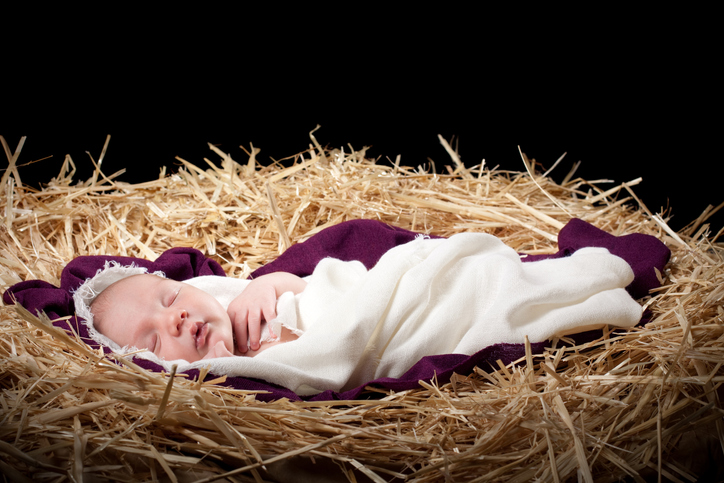
The stance taken by bodies like Dublin City Council and Fáilte Ireland of excluding Christian sentiments is “not only lacking in respect, but it’s distasteful”, former justice minister Charlie Flanagan told The Irish Catholic this week.
He believes the move is part of a “regrettable” trend towards increased political correctness among publicly-funded bodies.
“The reasoning seems to be not to give offence to non-Christians. I don’t accept that,” the Fine Gael TD said.
“I don’t know anyone who can be offended by Christmas. I have been a TD in rural Ireland for over 30 years, I know many Muslims and many non-Christians across my constituency and beyond who join in the Christmas festivities.”
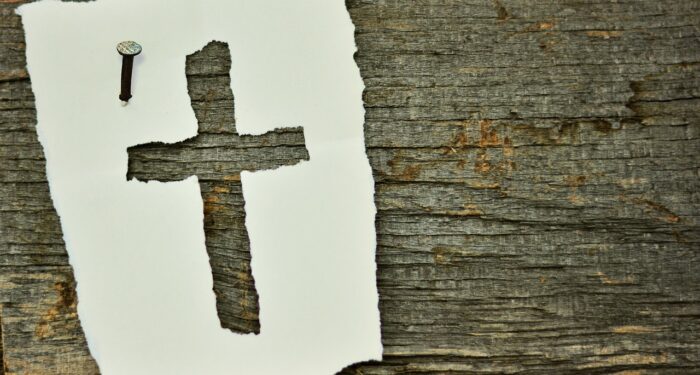
The significance of a new order on religious symbols in hundreds of State-run schools has been downplayed, with an official saying its implementation will be decided on a case by case basis.
Where religious symbols are displayed, the document says, they should be “reflective of the religions and beliefs of the entire school community” and that the community be consulted on the identification of such symbols.
Speaking to The Irish Catholic newspaper, ETB Director of Schools Seamus Conboy said the new policy will be applied on a school by school basis, rather than unilaterally.
Schools that display religious symbols “need to take into account the religious beliefs of all children in that school community. You know, if not in the world, but in the school community at least.”
“It’s just that for example, some of our ETB schools might have been set up in a time or in a place where it used to be historically just Catholic, when it was fine just to have a crucifix on the wall, but now, in a more pluralist community, there should be representation of all the different religious beliefs, you know? So that’s all the framework is advising”, Mr Conboy said.
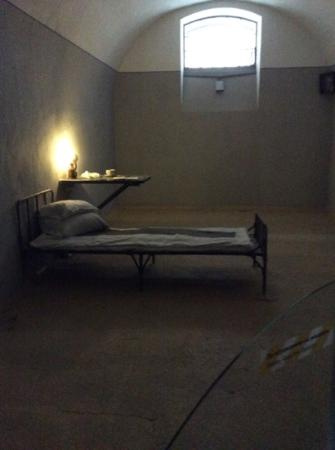
Two priests carrying out their ministry in the Russian-occupied city of Berdiansk, Ukraine have been imprisoned by military authorities, according to the international charity, Aid to the Church in Need.
Local Church officials fear they may be subjected to torture.
The two Redemptorist priests had been providing pastoral care to both Greek Catholic and Roman Catholic parishes and are among the few who still remained in the Russian-occupied territories.
According to the official statement sent to ACN, signed by Bishop Stepan Meniok of the Donetsk Exarchate of the Ukrainian Greek Catholic Church, the detention was “groundless and unlawful”.
ACN expressed great concern “in view of the repeated news about the disregard for basic principles of human rights by Russian Special services, who have taken the clergymen into custody”.
Bishop Meniok called for “the widest possible dissemination of information, in order to free the imprisoned chaplains. We appeal to the authorities and all people of good will with a request to join the cause of the release of the priests, as well as for increased prayer”.
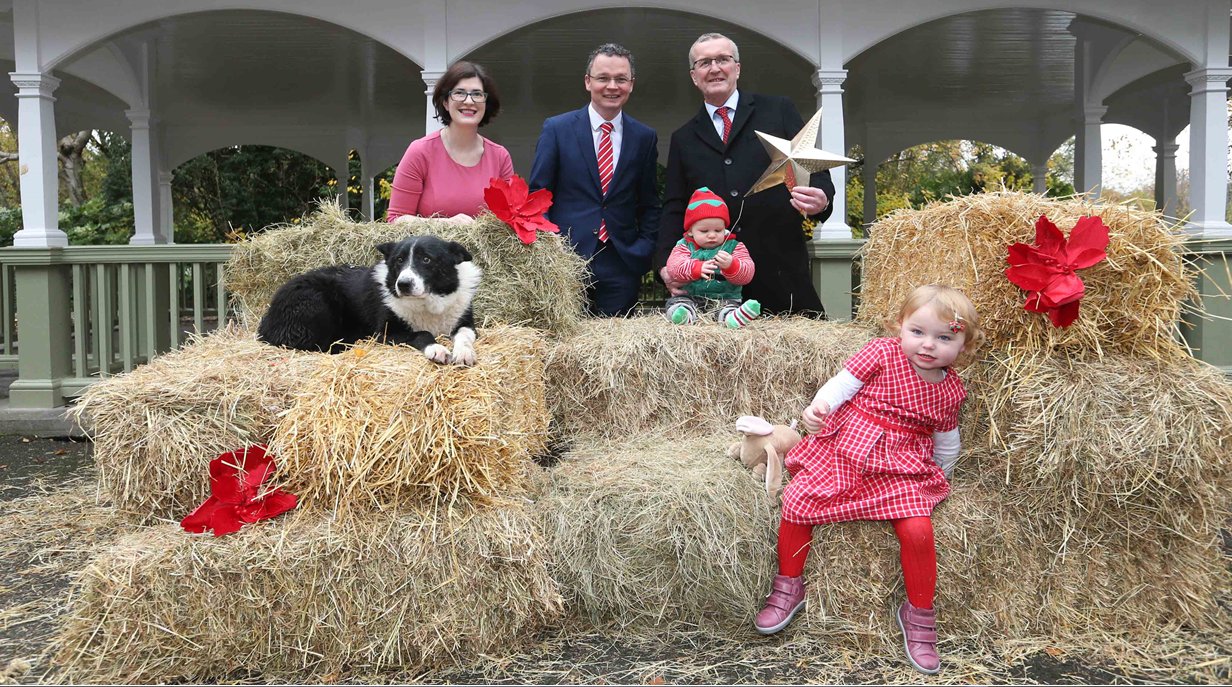
The live animal crib is set to return to Dublin in a new location from the 8th December, the feast of the Immaculate Conception.
The Summer House in St Stephen’s Green Park will house a donkey, a goat and two sheep as part of the annual Christmas tradition.
The crib had been located outside Dublin’s Mansion House since it began in 1995, until the Green Party Lord Mayor announced an end to the tradition.
In a statement today, the Irish Farmers Association said animal welfare is “paramount” and the shelter will be installed in line with the Farm Animal Welfare Advisory Council’s guidelines.
It said the animals will be tended to onsite every day by their owner and will return to their farm in Co Wicklow each afternoon.
Minister of State with responsibility for the Office of Public Works, Patrick O’Donovan, welcomed the announcement and said he is “standing up for tradition”.
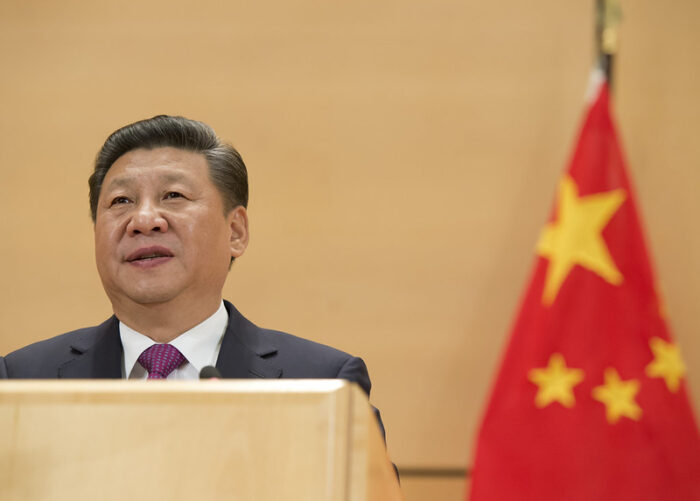
For the first time since brokering a controversial deal with China on the appointment of bishops four years ago, the Vatican Saturday called out Beijing for violating the terms of the accord by installing a bishop in a diocese not recognised by Rome.
John Peng Weizhao had been clandestinely appointed bishop of the papally recognized Diocese of Yujiang by Pope Francis in 2014, four years before the Vatican struck its provisional agreement with China in 2018.
However, on Nov. 24 he joined state-sanctioned Chinese Catholic organisations in a ceremony marking his installation as auxiliary bishop of the Diocese of Jiangxi, which is an ecclesiastic territory approved by Chinese authorities but not recognised by Rome.
In a Nov. 26 statement, the Vatican said they learned of Peng Weizhao’s installation with “with surprise and regret,” saying the Chinese diocese of Jiangxi is “not recognised by the Holy See.”
The Vatican said they had also received information stating that Peng Weizhao’s civil recognition was preceded “by long and heavy pressure from the local authorities”, and expressed hope that similar episodes will not be repeated.
The proportion of people in England and Wales identifying as Christian has fallen below 50% for the first time, according to census data.
Some 46.2% of the population described themselves as Christian on the day of the 2021 census, down from 59.3% a decade earlier, the Office for National Statistics (ONS) said.
This is the first time the proportion has dropped below half.
The percentage of people saying they had no religion jumped from 25.2% in 2011 to 37.2% in 2021.
The proportion of people describing themselves as Muslim increased from 4.9% to 6.5% and the percentage of people saying they were Hindu went up from 1.5% to 1.7%.
The religion question was voluntary on the 2021 census but was answered by 94% of the population of England and Wales, up from 92.9% in 2011, the ONS added.
Fiona O’Loughlin and Malcolm Byrne launched the private members’ bill last week. It would prevent a school’s ethos from having any influence on the RSE or SPHE curriculum, even when a school is faith-based.
The bill would also require the Education Minister to publish a report on “the need to include the voice of LGBTQU+ students” in RSE lessons.
“LGBTQU+” is defined in the bill as including “lesbian, gay, bisexual, transgender, queer, unsure, two-spirit, intersex and asexual”. The term “two-spirit” allegedly originated with some Native Americans as a way to describe gender or sexual identity among their community.
Carol Nolan, an independent TD for Laois-Offaly, said she believed the use of the term by non-indigenous people was a form of cultural appropriation.
“The bill… is an absurd waste of parliamentary time,” said Ms Nolan.
“It reeks of opportunism and a desperation… to attach themselves to the latest woke nonsense,” she said. “I also understand that Native Americans consider use of the term ‘two-spirit’ by those who are not members of the community to be a form of cultural appropriation. If so, this is a case of the two Fianna Fáil senators being hoist by their own woke petard.”
A statement by the UK’s main prosecution service that it is “no longer appropriate” to read parts of the Bible aloud in public has been dubbed “ill-judged” and “concerning”.
David Smyth of the Evangelical Alliance in Northern Ireland was reacting to a little-noticed statement from the Crown Prosecution Service (CPS), made during a recent attempt to prosecute a street preacher.
John Dunn, a soldier-turned-evangelist, was arrested in Swindon two years ago after exchanging words with two lesbians on the subject of homosexuality.
While pressing their case against him though, the CPS said: “Whether a statement of Christian belief or not, the court is being asked to consider whether the language has the potential to cause harassment, alarm or distress.
“There are references in the bible which are simply no longer appropriate in modern society and which would be deemed offensive if stated in public.”
David Smyth said it is not the role of the CPS “to govern what is ‘appropriate’ or ‘offensive’”.
“These comments are unwise and concerning, revealing a lack of understanding and faith literacy.”
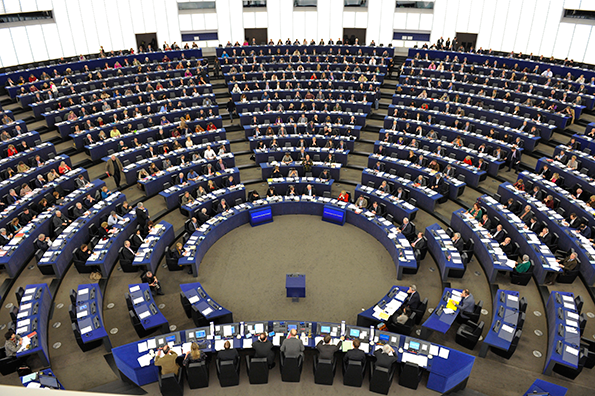
A group of over 100 MEPs and parliamentary assistants tried to block participants from attending a conference on abortion at the European Parliament last week.
Organised by the pro-life European Centre for Law and Justice (ECLJ), the conference featured leading speakers in the fields of law and politics, including Spanish MEP, Margarita de la Pisa, Grégor Puppinck, ECLJ Director, and Dr Andrew Ekonomou, an attorney at the American Center for Law and Justice, ACLJ, in Washington.
However, according to a press statement from the ECLJ, the conference “triggered the anger of the left which tried to intimidate us with illegal demonstrations both inside and in front of the European Parliament”.
“In the end, the conference could take place and the public could participate by entering through a back door, protected by the security of the Parliament,” the spokesperson said.
He added: “The fight for abortion is global. In each country, active and noisy minorities try to impose an ideological vision of abortion. Pressure groups are working at different levels to liberalise abortion in Europe. Without fear of contradiction, they present abortion as a harmless medical act that should be protected as a fundamental right. This ideological bloc that promotes abortion as a fundamental right does not respond to the real needs of women. It does not listen to them, it does not really want to help them”.