

Catholic primary schools in the Archdiocese of Dublin will continue to prepare children for Communion and Confirmation even as a new policy places greater emphasis on families and the local parish in sacramental preparation.
Under a “sacraments of initiation policy” published last month, parishes assume primary responsibility for the process. But the policy confirms Catholic primary schools will continue to play a key role by delivering the Grow in Love programme.
Under existing rules, schools are entitled to set aside up to 30 minutes of the school day for religious instruction or faith formation.
“Education for the sacraments in the school setting begins with junior infants and continues through the curriculum to sixth class,” the archdiocese policy states.
It adds that content specific to the first celebration of the sacraments of Confession and Communion is a two-year process beginning in first class, while content specific to the celebration the sacrament of Confirmation is also a two-year process beginning in fifth class.

Pro-life groups have assailed the report on a consultation on assisted suicide in Scotland resulting in calls for the Scottish Government to conduct an urgent independent review of the handling of the consultation process.
Right to Life UK said 3,526 submissions from members of the public opposed to a proposed assisted suicide Bill were removed from the consultation.
The report’s author who is also proposing the legislation in the Scottish Parliament chose to remove all consultation submissions from members of the public who were mobilised by Right To Life UK.
Yet, the author directly encouraged 57 constituents, known to support assisted suicide, to respond to the consultation and he included their views.
Right To Life UK spokesperson, Catherine Robinson, said the report’s author, MSP Liam McArthur, “appears to have rigged the outcome”.
In addition, Kevin Hay of Catholic Arena said McArthur chose to release the report on the same day Queen Elizabeth II died, ensuring it was buried under the news of the Monarch’s passing.
He also noted a lack of “visible neutrality” in the survey by not having the results collated by an independent agency.
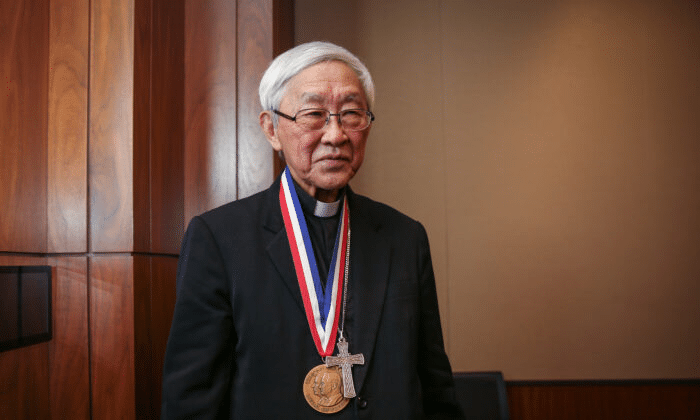
The highly controversial proceedings that could end in heavy fines or jail time have been widely criticised as an attack against democracy.
Zen, 90, and five others were arrested in May under a Beijing-imposed national security law for allegedly colluding with foreign forces.
Specifically, they are charged with failing to apply for local society registration for the now defunct 612 Humanitarian Fund between July 16, 2019, and October 31, 2021. The fund, for which they all held leadership positions, provided financial and legal aid to pro-democracy protesters who took to the streets in 2019 to oppose a controversial bill allowing extradition to mainland China.
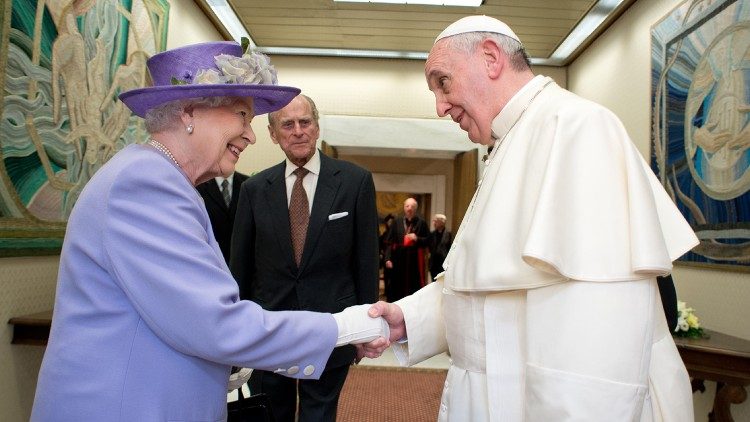
Queen Elizabeth’s strong Christian faith and prayer life, whose funeral took place today, have been recalled by those close to her.
“I think there have been only two Sundays since I’ve been here – apart from Covid times – that she didn’t come to church,” says Kenneth MacKenzie, who for 15 years was domestic chaplain to the Queen when she was at Balmoral.
In the months each year the late Queen was in Scotland, she would attend the little parish church of Crathie Kirk where she would sit in a pew to one side, upholstered in purple velvet.
While one of her constitutional titles was Supreme Governor of the Church of England, this church she attended so regularly was Presbyterian.
Mr MacKenzie felt that might have allowed the Queen to feel she could go more as a member of the congregation, rather than as a figure of authority.
“The moments I’ll cherish most would be those when the Queen would speak to me as a parish minister about things happening in the world,” he says.
It quickly became clear to him she was not only devout, but that she felt strongly that her role had been divinely assigned.
“I knew she felt a calling in some way from her people, but more than that, she saw her calling as from almighty God,” he says.
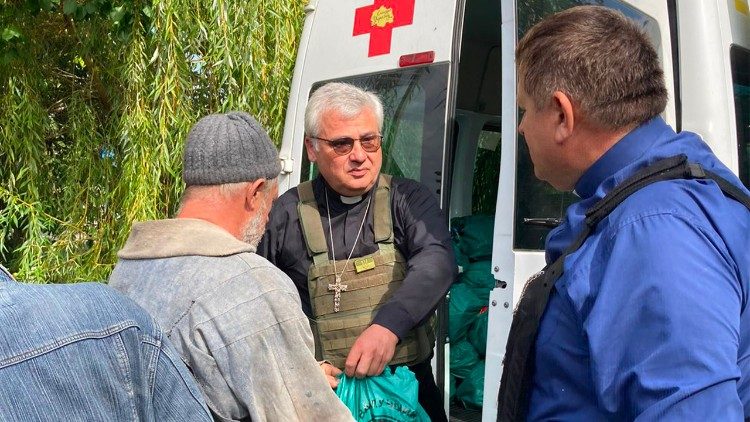
A humanitarian convoy in eastern Ukraine led by a Polish Cardinal working directly for Pope Francis, continued on its mission at the weekend despite coming under fire from Russian forces.
Konrad Krajewski, the pope’s top charitable official, is in Ukraine for the fourth time, visiting the frontline of heavy fighting in the eastern part of the country.
He travelled there in a minivan packed with humanitarian assistance from Pope Francis.
On Saturday, while distributing food to the Ukrainian people, Krajewski, along with the local bishops of Zaporizhnia, came under fire by Russian forces.
“While we managed to give the first portion of humanitarian help peacefully, during the second one they started to fire on us,” Krajewski told Crux. “For the first time in my life, I did not know where to run,” he said, explaining that a Ukrainian soldier guided him to shelter and warned that the group had 10 minutes before a second round of attacks would start.
“They say there are a lot of traitors in that terrain,” Krajewski told Crux, referring to people who collaborate with Russian forces. “When they spot humanitarian help being distributed, they give a location through their mobile phone and the gunfire starts.”
“We managed to distribute papal rosaries to the soldiers,” Krajewski said. “Almost all of the Ukrainian soldiers, no matter what their faith was, put the rosary on their neck immediately.”
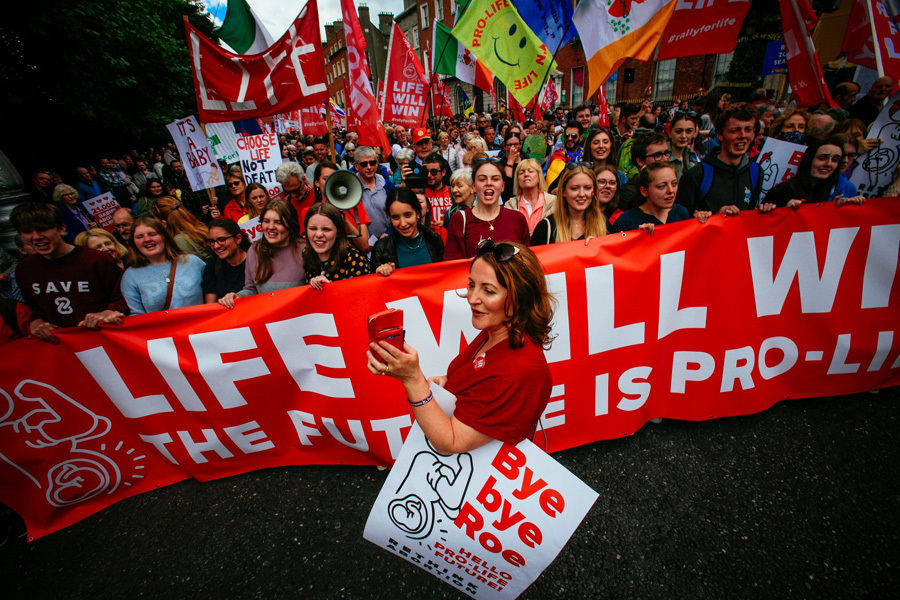
The annual March for Life is set to take place in Dublin tomorrow starting on St Stephen’s Green at 2.30pm. It is set to be the last large outdoor pro-life gathering of 2022.
At the March, people and groups will be uniting with pro-life Oireachtas members to demand that the Government address Ireland’s rising abortion rate and stop standing in the way of positive alternatives to abortion being being promoted. In the first three years of the law’s operation that have been around 20,000 abortions.
Among the speakers will be Carol Nolan, TD, and the Aontu leader, Peadar Toibin.
It is expected they will address the Government’s ongoing three year review of the 2018 abortion legislation.
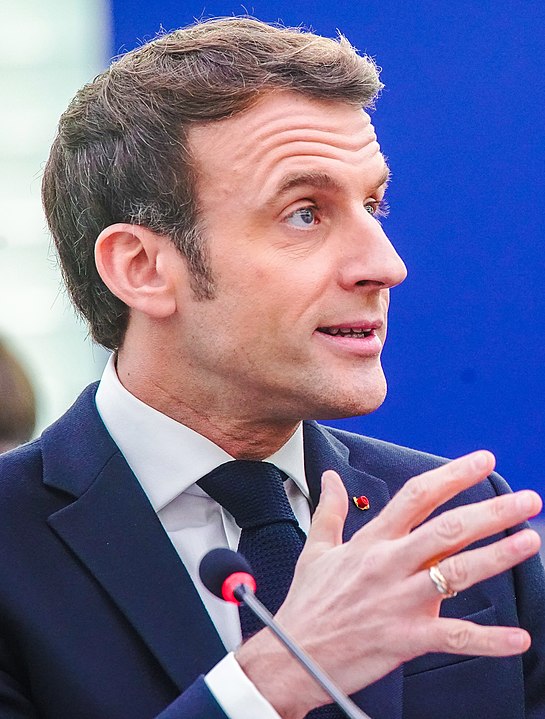
French President Emmanuel Macron has announced a national debate on end-of-life options that will include exploring the possibility of legalising assisted suicide.
A 2016 French law provides that doctors can keep terminally ill patients sedated before death but stops short of allowing assisted suicide.
Macron said in a written statement that a panel of citizens would work on the issue in coordination with health care workers over the coming months, while local debates are organized in French regions.
The government plans to hold parallel discussions with lawmakers from all political parties to find the broadest consensus, with the aim of implementing changes next year, the president’s statement said.
Assisted suicide, which involves patients self-administering a lethal dose of drugs, is allowed in Switzerland. Euthanasia, a process in which a medical professional directly gives the drugs, is currently legal in the Netherlands, Belgium, Luxembourg and Spain under certain conditions. Assisted suicide and euthanasia numbers tend to rise fast and the grounds expand once it is introduced.
Macron’s announcement came the day the family of famous French director Jean-Luc Godard said he died by assisted suicide at his home in the Swiss town of Rolle.
French polls in recent years steadily showed a broad majority of people are in favor of legalising euthanasia.
The current law allows patients to request “deep, continuous sedation altering consciousness until death” but only when their conditions are likely to lead to a quick death.
Doctors are allowed to stop life-sustaining treatments, including artificial hydration and nutrition. Sedation and painkillers are allowed “even if they may shorten the person’s life.”
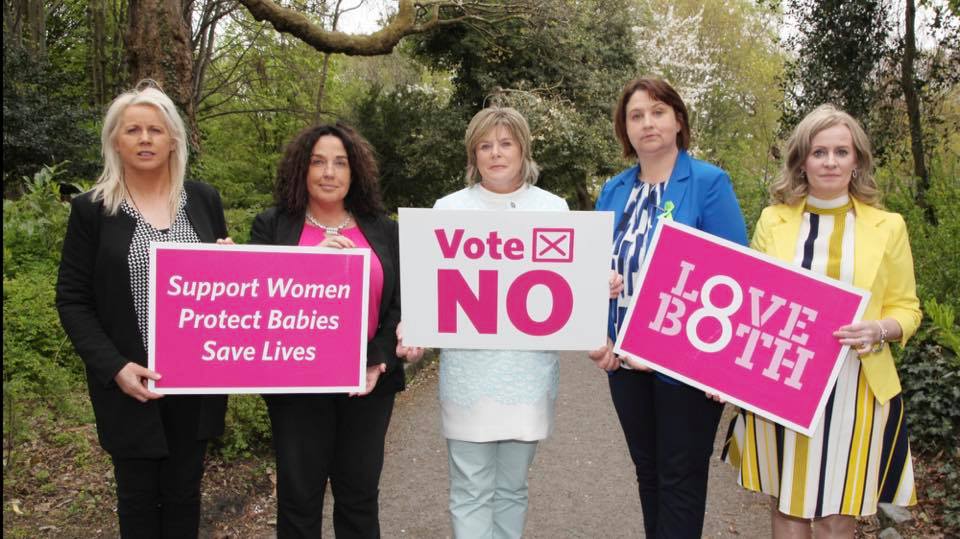
A Fianna Fáil Minister of State who called for a No vote in the 2018 abortion referendum now wants the current radical law liberalised even further.
Unlike other pro-life voices at the time, Anne Rabbitte did not believe in a prohibition on abortion, or retaining protection for the right to life exactly as it was enshrined in the constitution. However, she did think the proposal before the country was too permissive. Now she says she was out of touch with her electorate.
“People have amazed me. Women that I would meet in my own area, that would be in their 80s would turn to me and say: ‘Yes, I voted yes because I remember the marriage bar, and I remember the mother and baby homes, and I know what happened and yes, I think it’s right that women would have their own say.’”, she told the Examiner.
While Ms Rabbitte wouldn’t comment on the current review of abortion legislation, she said: “Where couples are given news that perhaps the baby won’t survive, and it’s clinically the opinion of the gynecologist, we have to leave the choice of their healthcare to the couples themselves. I do think it’s wrong that they have to leave the State.”
Legislation allows abortion up to nine months where a doctor deems the unborn child would likely die within 28 days of birth. Some campaigners want this restriction on disability abortions abolished meaning children who could survive for months, or even years after birth, could be aborted.
In the 2020 General Election every TD who voted against abortion legislation at the end of 2018 returned to office.

The Irish Catholic Bishops’ charity Trócaire has been forced to end its operations in Nicaragua after its registration to work and provide supports in the central American nation was cancelled by the state.
The crackdown by local authorities has hit both NGOs and religious groups such as Mother Teresa’s Missionaries of Charity who were expelled from the country on July 6th.
After more than three decades working in Latin America’s second-poorest country, a spokeswoman for the Irish Catholic Church’s overseas development agency confirmed that Trócaire is one of “several hundred NGOs that have had to cease operations in Nicaragua due to the cancellation of our registration by the state of Nicaragua”.
The charity, which began running aid programmes in Nicaragua in the 1970s and opened a full-time country office in 2002, supported more than 51,000 people in need last year, said the spokeswoman. “We are deeply disappointed that we can no longer deliver vital humanitarian assistance to communities we have worked with for over 30 years.”
Every woman in Ireland between the ages of 17 and 25 can avail of free contraception from today, despite earlier Government advice that the policy would probably be ineffective and a waste of public funds. The Government estimates that the scheme will cost €9 million for the rest of the year which means it could cost around €35 million in a full year.
The policy was discussed in a a 2019 Working Group on Access to Contraception, under the then Health Minister, Simon Harris.
It said, “there is a considerable risk that simply making contraception free to the end-user will only displace private expenditure without necessarily modifying behaviour or yielding the level of desired health benefits.”
The Government adopted the policy anyway and it went into effect today.
The scheme is designed to remove the financial burden around contraception from younger people and it is not linked to having a medical card.
Currently the cost of these prescriptions are mostly covered for medical card holders, but those without a card can pay hundreds of euro in fees and prescriptions.
The deal covers the pill and long-lasting contraception, including coil insertions and women will need to show their PPS number as eligibility will be checked.