
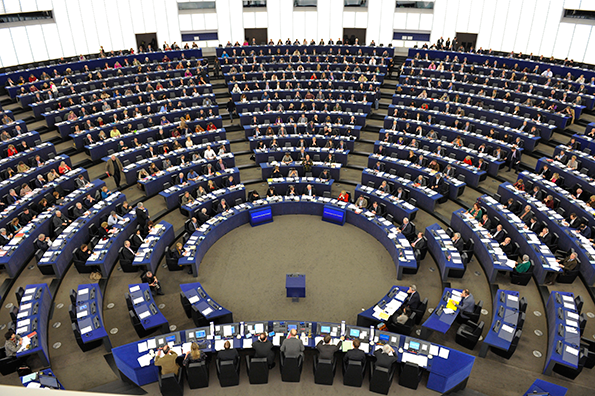
Pro-family groups have reacted with dismay to news that an EU report about the gender pay gap is excising the word “man” and “woman” and replacing the word “sex” with “gender”. In addition, the European Parliament will bypass a Plenary debate on the report that deals with an EU directive.
The report responds to a European Commission proposal to tackle the gender pay gap through the implementation of pay transparency measures. Two Committees, the EMPL and FEMM, adopted the report, “Strengthening the application of the principle of equal pay for equal work or work of equal value between men and women”, which amends the Commission’s proposal.
The Federation of Catholic Family Associations in Europe (FAFCE) say the report is highly problematic in its content and should have been the subject of an open and democratic debate.
“Indeed, it systematically replaces the mention of ‘sex’ with ‘gender’. The mention of ‘women’ or ‘men’ is replaced by ‘workers of different gender’”, according to a press release.
FAFCE’s Vice-President, Angelika Weichsel Mitterrutzner highlighted that, as stated by the Commission, “If the aim of this directive is to fight the gender pay gap between men and women, what kind of protection will these measures implement if no mention is made of women?“.
FAFCE’s President, Vincenzo Bassi, notes that “The text, as modified by the European Parliament, would shift the directive from being a legislative act aimed at protecting women on the basis of the EU law on sex discrimination, to a vague condemnation of pay discriminations for different grounds.
Videos of dead Ukrainian civilians, many apparently executed by Russian troops, are further evidence that “the struggle of Ukraine is a spiritual struggle against evil, against the devil and his servants,” said Ukrainian Archbishop Sviatoslav Shevchuk of Kyiv-Halych.
“A mountain of corpses, rivers of blood, a sea of tears” are the ongoing reality of Ukraine, the archbishop said in his daily video message from Kyiv April 4.
Shevchuk told his people that while it is right to support the military and to keep fighting the Russian invasion, the evil at play can only be vanquished with goodness, holiness and generosity.
“Pride is fought through humility, avarice is healed by sacrifice, laziness is treated by diligence,” the archbishop said.
“If the enemy kills us (and) sows death, let us serve life, honour human life from conception to natural death,” he said.
“We see that today the enemy is robbing Ukrainians, robbing, looting,” the archbishop said. In response, Ukrainians should be “generous and support those who need works of Christian charity.”
Where the Russians are “destroying everything,” he said, Ukrainians should try to “build, get to work,” including by starting the spring planting if possible.
“Let us do good, and then evil will be defeated,” he said.

It is perfectly legal for public bodies and businesses to limit services to a single sex, the UK’s equalities watchdog declared Monday in what is seen by some as a boost for women’s rights.
There has long been uncertainty over whether services such as refuges for female rape victims are allowed to exclude trans people who were born as a man.
The Equality and Human Rights Commission (EHRC) in the UK said that service providers wishing to limit services to a single sex are legally able to do so, provided the reasons are justified and proportionate.
The new guidance will have huge ramifications for hospitals, retailers, hospitality and sports clubs which have faced difficult issues in recent years under pressure from the trans lobby.
It makes it clear that it is legal for a gym to limit communal changing rooms to a single sex, as long as a gender neutral changing room is also provided for trans people.
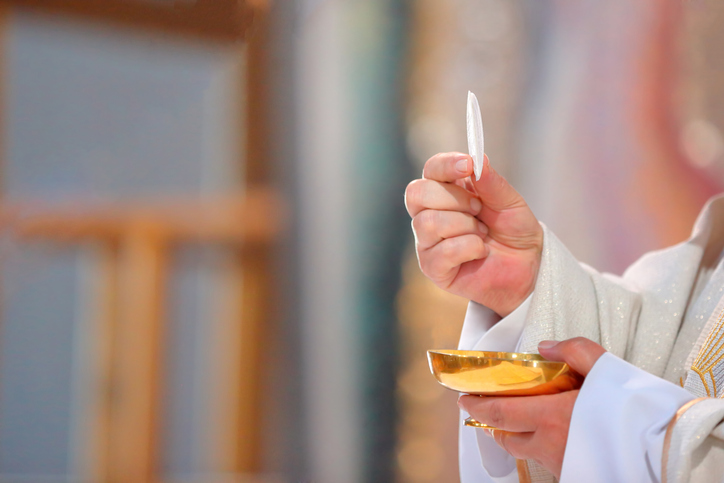
Revised national guidelines for the College of Policing will allow for sacramental access at crime scenes where operationally possible following the conclusion of a working group set up in the aftermath of the murder of MP Sir David Amess.
The murder in October 2021 raised a number of questions concerning the appropriate response to granting access to priests or other ministers of religion to crime scenes in order to administer Last Rites or other sacraments to a crime victim.
The working group has developed new straightforward guidance, which has been published by the College of Policing as part of the Managing Investigations Authorised Professional Practice.
The new section, entitled ‘Requests for third party access to a scene to attend a victim’ can be found at app.college.police.uk
This Authorised Professional Practice update provides advice on balancing medical and investigative priorities and requirements, with empathy for the victim, their family and any religious needs.

The UK government has announced it will ban so-called conversion therapy for gay or bisexual people in England and Wales – but not for people with gender dysphoria who claim a transgender identity.
The move came hours after it had said it would drop plans for the ban entirely.
The announcement on Thursday evening that ministers would explore non-legislative routes to stop the practice was met by a backlash from LGBT groups and MPs.
The Evangelical Alliance reacted with surprise to the developments. They have consistently called on the government to honour its two prior, public commitments on conversion therapy – to end coercive and abusive practices while ensuring people can receive the prayer and spiritual support they choose.
They say no ban should have the effect of stopping churches or Christian ministries from teaching a biblical view of marriage as between a man and a woman, and sexual activity as reserved for that; it should not stop churches from providing pastoral care or prayer support for people who seek it. And it certainly should not stop churches from engaging in the spiritual formation of young people.
Other Church leaders have written to Boris Johnson to express “considerable concern” over the Government’s decision not to abandon its proposed conversion therapy ban.
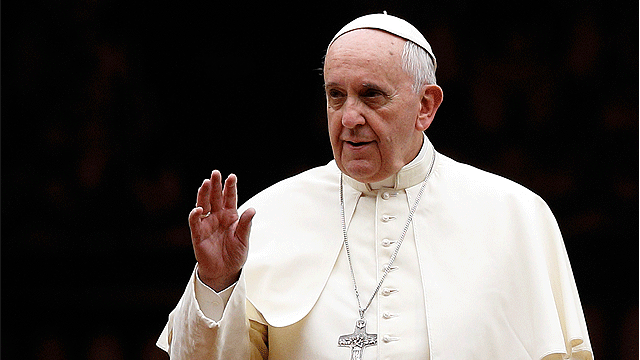
Pope Francis on Saturday implicitly criticised Russian President Vladimir Putin over his invasion of Ukraine during a speech in the Maltese capital Valletta.
He also confirmed to reporters that he is considering a visit to the capital Kyiv after receiving invitations from both the city’s mayor, and from the Ukrainian President Volodymyr Zelenskyy.
Without explicitly mentioning Putin or the war in Ukraine, the pope touched on “the wind blowing from the east of Europe,” according to the Vatican’s news agency Vatican News.
“The icy winds of war, which bring only death, destruction and hatred in their wake, have swept down powerfully upon the lives of many people and affected us all,” Francis said, adding that “once again, some potentate, sadly caught up in anachronistic claims of nationalist interests, is provoking and fomenting conflicts, whereas ordinary people sense the need to build a future that will either be shared or not be at all.”
The pope had previously called the war in Ukraine a “massacre,” and “unacceptable armed aggression.”
https://www.politico.eu/article/pope-lashes-out-at-potentate-putin-over-anachronistic-claims-on-ukraine/

Gardaí were not willing to accept claims by the HSE that abortion exclusion zones were required to ensure a broad rollout of abortion in GP practices across the country, new documents reveal.
The HSE met with Department of Health and Garda officials in May 2019, during which gardaí said new legislation to establish safe access zones around GP practices and hospitals was not required. Instead, it was decided that local superintendents would be written to “advising them to be aware of services and to meet with providers locally to advise them that they can engage with the superintendent if there are any issues”.
HSE officials had a different “perspective” and argued that “the lack of safe access zone legislation was influencing some GPs’ willingness to sign up to provide the service; that the introduction of safe access zones had the potential to increase GP sign up and potentially increase the number of GPs opting to have their details shared via My Options”.
This was in contrast to the view of gardaí, who “indicated that where there is a breach of the law, they currently have the powers to intervene but this needs to be balanced with allowing freedom of speech and peaceful protest.
“On balance it was felt that the levels of anti-abortion activities were pretty low, that legislation exists to deal with any breaches of the law and that while ToP [termination of pregnancy] could be included into new legislation, it may ‘add fuel to the fire’.”
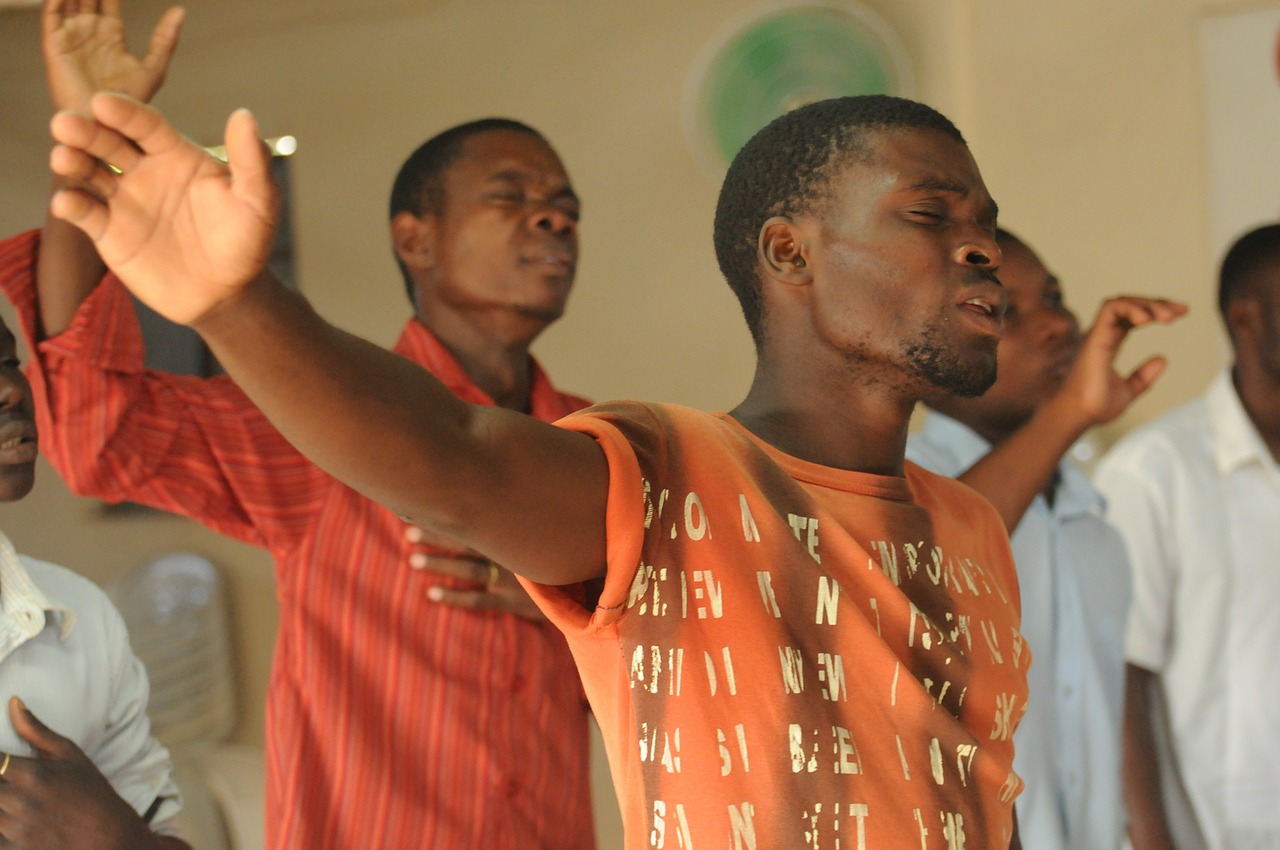
A Government TD has criticised the uncertainty caused by “substantial delays” in processing applications for visas for overseas clergy and other religious workers who want to come here and work as missionaries or pastoral assistants, usually at the invitation of local churches and religious congregations. They are often needed to make up falling numbers of home-grown clergy or cater ot the growing number of Christian immigrants into Ireland.
Even they get here, they are usually limited to six years, unlike many other foreign workers.
Fianna Fáil’s Brendan Smith told The Irish Catholic that there are “substantial delays” in getting the Minister of Religion visas and said it causes hardship on the person applying.
“These are people who are needed, where bishops or missionary societies have asked them to come and help,” he said.
The Cavan-Monaghan TD also believes that there should not be a time limit of six years for people coming to Ireland to work as a minister of religion. The current legislation allows for a three-year visa, with three possible one-year extensions.
“The timeframe of six years needs to be reviewed and removed I believe,” he said. Justice Minister, Helen McEntee, is resisting this.
Deputy Smith commented: “Over the years we have seen people come from Eastern European countries and from Africa to minister in the different religions. And they have been a welcome addition for the churches.”
He added that they are not a burden to the state, they are contributing “through their different work, important pastoral work, important education work as well”.
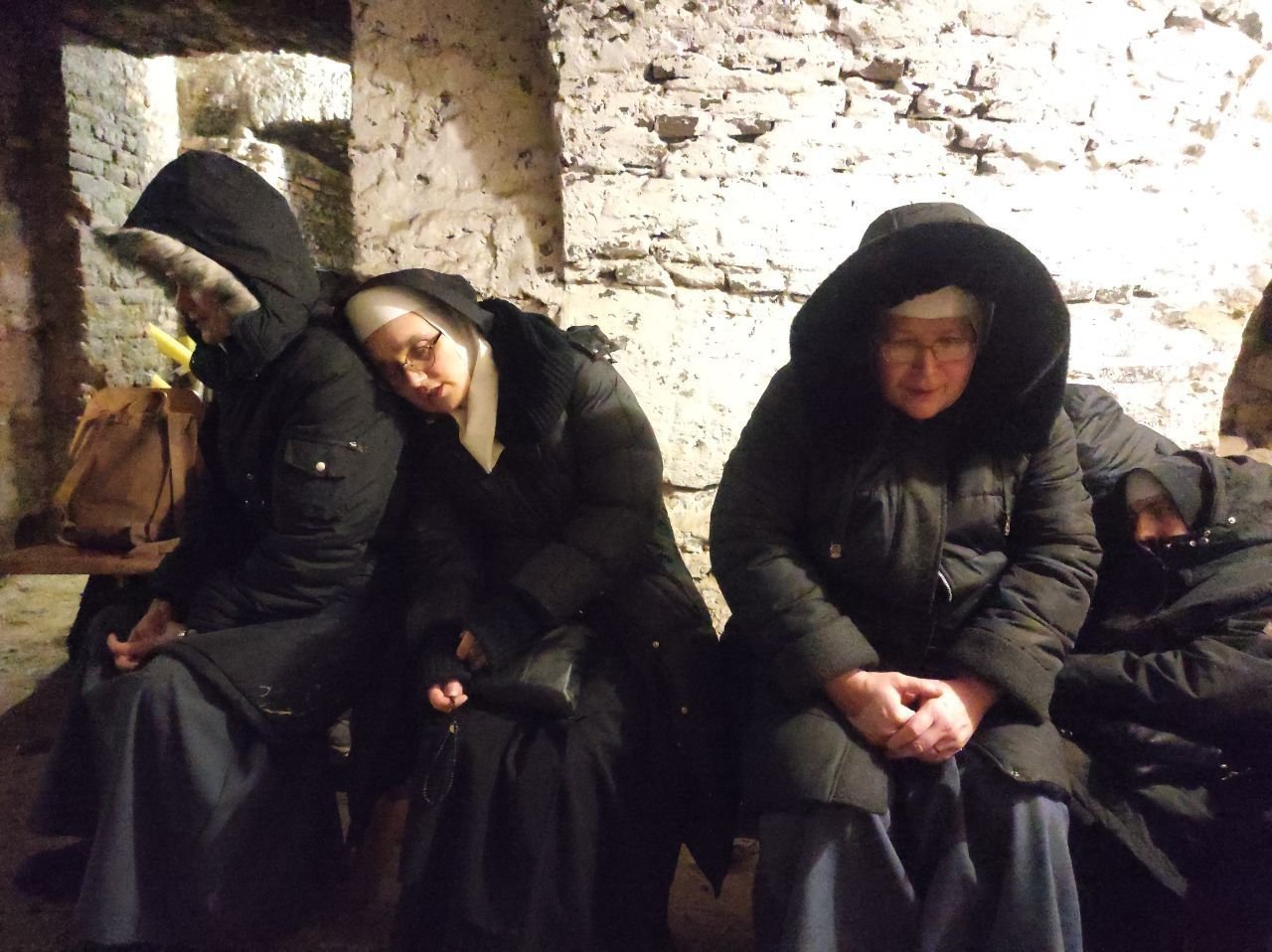
A young Spanish priest decided to stay with his parishioners in Ukraine rather than flee for safety despite the Russian invasion and a growing litany of serious war crimes against the civilian population.
Father Pedro Zafra is a 31-year-old priest from Córdoba, Spain, who arrived in Kyiv in 2011 for priestly formation. He was ordained last June and is a member of the Neocatechumenal Way. The priest serves the parish of the Assumption of the Virgin in the Ukrainian capital.
“It was an inner battle,” he said, adding that he found the answer in prayer with a passage from the Gospel which “spoke of the mission and the support of God’s grace to carry it forward,” and that’s why he decided to stay.
“We have several elderly people in wheelchairs, families with their small and adolescent children, and some young missionaries,” Fr. Zafra told the Spanish daily ABC, and stressed that living through this situation in community “helps us a lot to cope with it.”
“I’m not a hero. I couldn’t handle this situation by myself. It’s God who gives me strength through prayer and the sacraments,” he said.

Italy has moved closer to the legalisation of assisted suicide.
The lower house of parliament voted for a new law — by 253 votes to 117 with one abstention — which would permit “voluntary medically assisted death” for terminally ill patients.
To qualify, patients would have to be suffering from an irreversible illness with an “unfortunate prognosis” which causes “absolutely intolerable physical and psychological suffering”.
The law does not have popular support, even though there is an active and vocal euthanasia lobby in Italy. In 2019, Italy’s Constitutional Court in 2019, ruled that assisted suicide should not be punishable in certain cases. It left it up to Parliament to draft a law setting out the details.
In February the court blocked an attempt to hold a euthanasia referendum, insisting that it was Parliament’s job to decide.
A columnist for L’Avvenire wrote: “in our legal system there can be no room for a right to death, not even an implicit one. The choice to help a person die or not must remain with individual doctors so that it continues to be a tragic exception as much as possible, and does not flank other therapeutic and care offers, as if appropriate therapies and death were equivalent choices.”