

The Council for Healthcare of the Irish Catholic Bishops’ Conference has urged everyone to support the Covid-19 vaccination programmes currently in place in Ireland, north and south of the border.
In a statement released yesterday, they said the development and provision of the vaccines “is already providing reassurance for those who are most vulnerable to the virus and will help us to return to normality in terms of work, education, religious practice, and sporting and leisure activities as soon as possible”.
They encourage all parishes and Church personnel to promote the vaccination programmes and to encourage elderly parishioners, relatives and neighbours to avail of the opportunity to protect their health and the health of the whole community.
In addition, they also called on the Department of Health and public health authorities “to make vaccines available to carers in the Republic of Ireland as a matter of priority and to priests who are chaplains to nursing care facilities and who preside at funerals”.
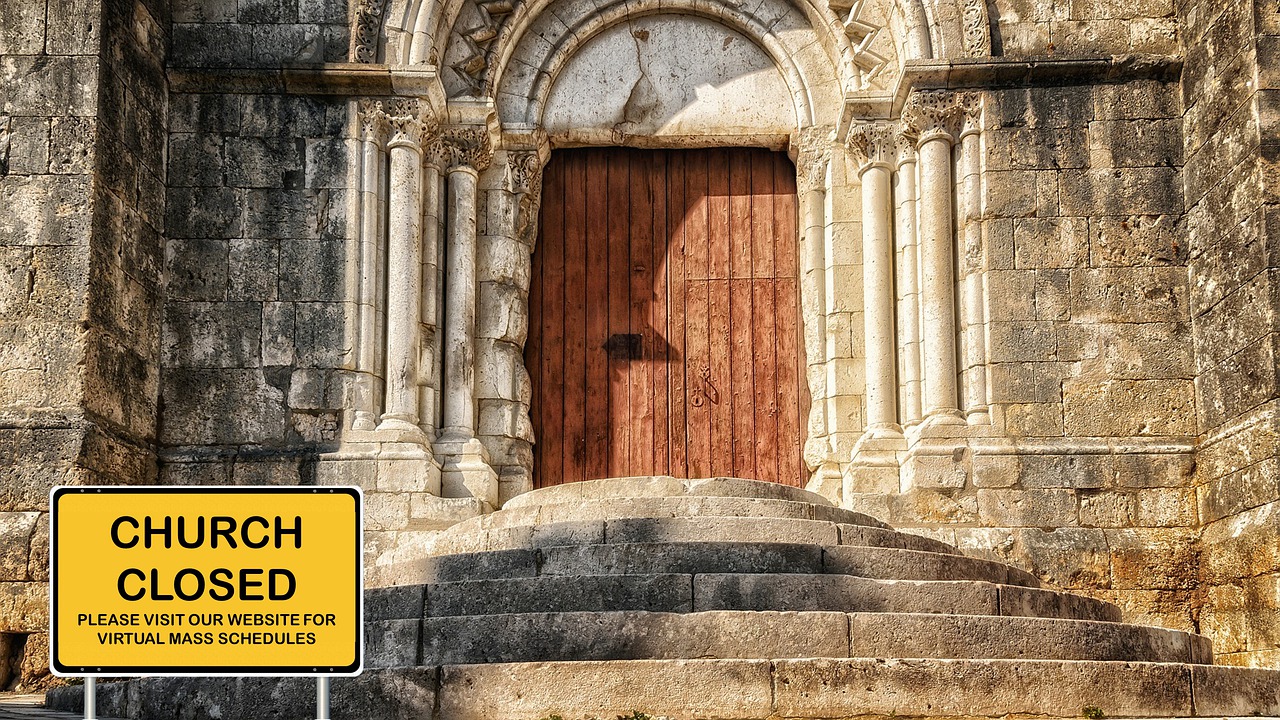
Religious freedom is being eroded in the global response to the coronavirus pandemic, the Vatican’s foreign minister said in a video message to the United Nations Human Rights Council on Tuesday.
“The Holy See would like to reiterate the urgency of protecting the right to freedom of thought, conscience and religion. In particular, religious belief, and the expression thereof, lies at the core of the dignity of the human person, in his or her conscience,” Archbishop Paul Gallagher said.
Gallagher, the Holy See’s secretary for relations with states, said that “the global response to the COVID-19 pandemic reveals that this robust understanding of religious freedom is being eroded.”
“The Holy See would like to stress that, as is recognised in numerous human rights instruments, the freedom of religion also protects its public witness and expression — both individually and collectively, publicly and privately — in forms of worship, observance and teaching,” he said.

Church leaders in China in collaboration with the State will embark on a re-education of their members in communist party thinking in the run-up to the centenary of the CCP’s founding in July.
That’s according to a report by Fr. Bernardo Cervellera, head of the AsiaNews press agency and a missionary with the Pontifical Institute for Foreign Missions (PIME) who previously lived in Beijing where he taught History of Western Civilisation at Peking University (Beida).
On July 23rd, the Church will hold a symposium “in memory of the centenary of the founding of the Chinese Communist Party” and will deepen their understanding of “the moving events during the period of the Long March”, which laid the foundations for the definitive victory of Mao Zedong over Chiang Kai Shek.
The symposium and the study of the Long March are just some of the events that will characterize the program of ecclesial commitments drawn up by the Council of Bishops and the PA for this year.
There will also be “formation courses in collaboration with the Central Institute of Socialism”; preparatory courses for the national gathering of the “Chinese People’s Political Consultative Conference” (held in March); the “construction of the Patriotic Association”, and much more.
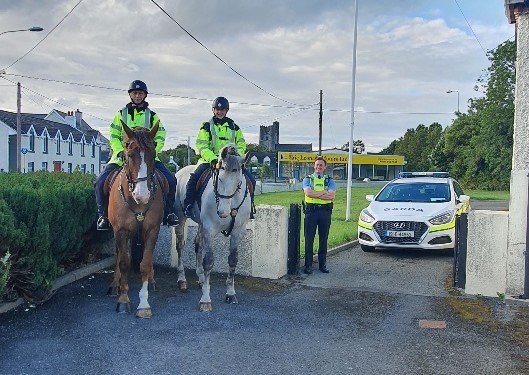
A priest has begun locking the doors of his church while saying mass after complaints to Gardai that people had been attending his liturgies.
The parish priest of St. Brigid’s church in Kilrush, Wexford, Father Joe Power, said that he has been holding online Mass, but doors had remained open during Mass for a small number of people to attend should they so wish to.
During the week, less than five people might attend Mass, while ten to 15 people might attend on a Sunday, he said.
However, he had a call from gardaí after a complaint was made that the church was allowing big crowds in to attend Mass, something which he said was completely false.
“From the word go, I was told that we could leave the church doors open for private prayer and participation and that’s what I’ve done, I’ve adhered to the law completely. It seems to me that there was a crank out there or maybe cranks, but they maintain that there were huge crowds coming to Mass in Kilrush and that is totally and completely false and untrue.
“Last weekend, as a result, I had to keep the doors of the church closed during Mass, and it was one of those situations that was forced upon us rather than being right”.
A family law lawyer has said the number of clients she has taken on since Christmas “is off the Richter scale“.
“Usually most call to make an enquiry. They don’t all necessarily translate into cases, but that’s what’s happening now. I took on 10 new clients in January alone”, said Marion Campbell at KOD Lyons.
She said couples must wait until December 2021 or spring 2022 to have their day in court so until then, the vast majority of her clients are living and working under the same roof, even though they may be undergoing messy situations.
“Some couples have taken safety orders out against each other. I can tell you there are huge mental health problems coming down the track. I’m seeing depression, addiction – especially to alcohol,” she said.
She also commented on the lack of awareness of a no-fault divorce regime.
“The other thing, particularly women, say to me
When a husband has had an affair, the women tell her, “I’m going to go for him in court,” but she has to tell them “the court is not concerned about why their marriage has broken down. We don’t have a fault-based system of separation in Ireland”.
“So your husband – or wife – can have multiple affairs. The court simply wants to ensure the couple have been apart for a sufficient time in order to legally separate and then divide up the ‘asset pot’ to ensure everyone has proper provision.”
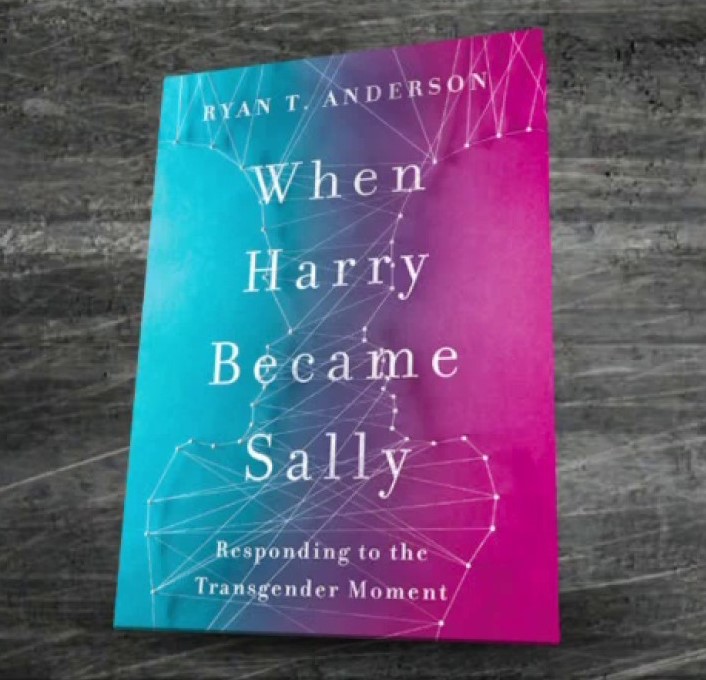
One scholar’s critical book on the transgender movement has reportedly been removed from Amazon.com.
On Sunday afternoon, Ryan Anderson—the current president of the Ethics and Public Policy Center (EPPC)—reported that his book When Harry Became Sally: Responding to the Transgender Moment was no longer listed for purchase on the online retail giant Amazon.com. The book was released three years ago, on Feb. 20, 2018.
“And not just like it‘s out of stock. The pages are down. You can’t buy a used copy. You can‘t buy the kindle. You can’t get the Audible version,” Anderson told CNA. He said that his book’s publisher asked for an explanation from Amazon as to why it was not being listed online, but had not yet received an explanation.
Anderson’s book was commended by professors of psychiatry, psychology, and medical ethics at universities such as Johns Hopkins, Boston University, New York University, and Columbia University.
Despite the acclaim from scholars, he said it was still de-listed at Amazon. “It’s not about how you say it, it’s not about how rigorously you argue it, it’s not about how charitably you present it. It’s about whether you dissent from a new orthodoxy,” he said.
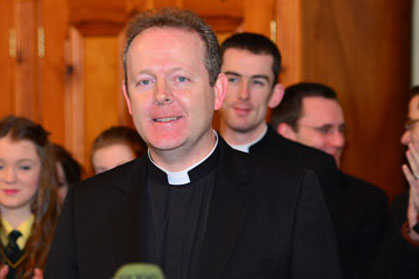
Catholic Church leaders have told Taoiseach Micheál Martin of their strong desire that people might be allowed “to gather safely for the important ceremonies of Holy Week and Easter”.
At a virtual meeting with Mr Martin on Friday, the four Catholic Archbishops emphasised the spiritual comfort and hope that participation in public worship brings to people of faith.
The archbishops reiterated their desire to return to worship, in particular during the season of Lent and with the approach of Holy Week and Easter. Easter this year falls on April 4th. Lent has already begun.
The archbishops asked that public worship resume when an easing of restrictions is considered. They also requested consideration of an increase in the number who may attend funeral Masses. A maximum of 10 mourners can currently attend.
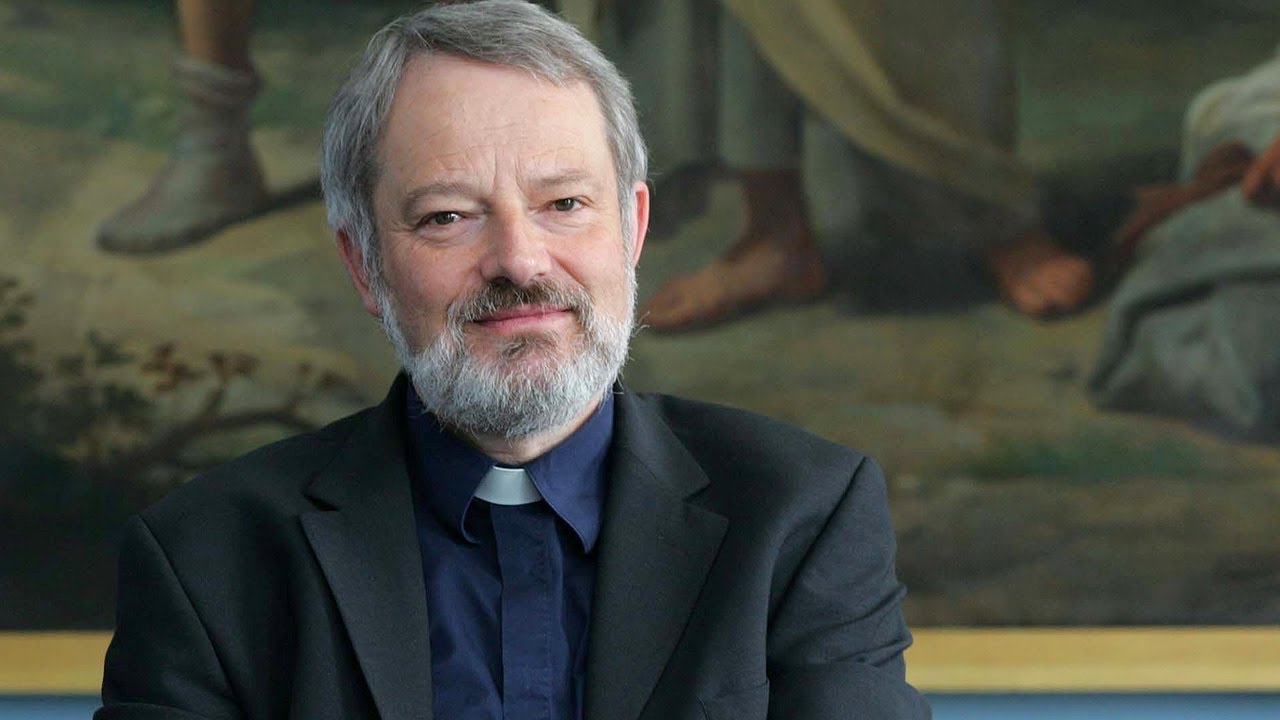
Bishop Kevin Doran has been reportedly banned from tweeting after he uploaded a post outlining his opposition to an assisted Suicide Bill going through the Oireachtas.
In one tweet, Bishop Doran wrote: “There is dignity in dying. As a priest, I am privileged to witness it often. Assisted suicide, where it is practiced, is not an expression of freedom or dignity, but of the failure of a society to accompany people ‘on their way of the cross’.”
However, Twitter censored the post for “violating our rules against promoting or encouraging suicide or self-harm”.
Although the intent of the post was the opposite of what twitter claimed, upon appeal, the social media giant doubled down on its stance and said, “Our support team has determined that a violation did take place, and therefore we will not overturn our decision”.
Bishop Doran’s twitter profile remains in place, but the offending tweet has been removed and he has been barred from posting anything new.
Researchers from Trinity College have found that the “wish to die” among older people living in the community is often “transient” and is strongly linked to underlying issues of depression and feelings of loneliness.
A survey of more than 8,100 people aged over 50 found that 4 per cent of people surveyed expressed a wish to die. However, almost three-quarters of those who initially expressed this desire did not feel the same when researchers revisited the issue with them two years later.
60 per cent of those who reported a wish to die had co-existing depressive symptoms while half of those who stated they wanted to die had been diagnosed with depression. This indicates a “high burden of undetected mental health problems” in the group, the authors said.
Almost three-quarters of those with a wish to die were also lonely, the study found. Those who subsequently said two years later that they no longer felt the wish to die reported that their symptoms of loneliness and depression had improved.
The report’s authors noted that their findings are particularly pertinent given the consideration of an assisted suicide Bill by the Oireachtas and have called for an “enhanced focus on improving access to mental health care and addressing social isolation in older people”.
Prof Rose Anne Kenny, head of medical gerontology at Trinity College, said that almost two-thirds of participants who expressed a wish to die in the study had at least one chronic illness which meets the criteria for a terminal illness as proposed in the Bill.
The ban on public worship due to Covid-19 in Scotland has been challenged in Court by a Glasgow priest. Scottish worshippers currently face criminal penalties for going to Mass or religious services, other than weddings or funerals, in contrast to their English neighbours who can attend with safety measures in place.
Father Tom White, a priest of the Archdiocese of Glasgow and the Dean of the City East St Alphonsus Church in Glasgow, is leading this effort as part of the Catholic community in making the case for churches as an essential service during a time of societal crisis.
“As a priest, I have witnessed first-hand the grief and suffering that Covid-19 has caused for my parish members. Therefore I know, as a priest, that we need to open my church to be able to support them best in their hour of need,” said Father White.
“I speak for many in the church when I say that it’s very important to keep people safe and well during this pandemic. But, this can and should be done while also allowing people to fulfil their need to draw close to God and worship in community at the church. With appropriate safety measures, we can accommodate both of these outcomes,” he continued.