
A ruling in Germany upholding the right of pharmacists to conscientiously object to selling the ‘morning after pill’, which can act as an abortifacient, is being appealed by the professional body for pharmacists.
The case concerns German pharmacist, Andreas Kersten, who before his retirement, owned and operated a pharmacy in Berlin. In accordance with his conscience and his deeply held beliefs, he neither stocked nor sold the ‘morning after pill’. This drug can prevent the implantation of an embryo in the uterus and cause the death of an unborn child. After refusing to sell the product in his pharmacy, he was reported to the Berlin Pharmacists’ Chamber which took the matter to the Professional Court at the Administrative Court of Berlin.
The court ruled in his favour, but the Pharmacists’ Chamber has now appealed against the decision.

A man who paid a woman to have an abortion, but who later changed her mind, is now denying paternity of the child in a bid to avoid paying maintenance.
The unusual case was brought before Judge Patrick Durcan in Ennis district Court last Thursday.
The woman is alleging the man is the father of the child, but he denies this and is also refusing to pay for a paternity test.
He said he gave the woman €500 to abort the child, and he told Judge Durcan the woman can pay for the DNA test herself out of those funds.
The US federal government took Ohio’s side in a lawsuit over the state law prohibiting doctors from performing abortions based on a foetal diagnosis of Down Syndrome.
The US Justice Department said in a filing that “nothing in Ohio’s law creates a substantial obstacle to women obtaining an abortion, and nothing in the Constitution or Supreme Court precedent requires States to authorise medical providers to participate in abortions the providers know are based on Down’s syndrome”.
Taking up an argument used by supporters, the federal government told the court the law protects against discrimination based on disability, sticking with the principle established in other laws, such as the Americans for Disabilities Act.
The law would specifically outlaw abortions in cases where there is a positive test result or pre-natal diagnosis indicating Down’s syndrome.
Doctors who perform such an abortion could be charged with a fourth-degree felony, stripped of their medical licence and held liable for legal damages under the law.
A pregnant woman would face no criminal liability.
A woman who underwent gender reassignment treatment but has sought to reverse the process is to lead a legal challenge to practices at Britain’s first NHS child gender clinic.
Keira Bell, 23, was in her mid-teens when she was given hormone blockers and cross-sex hormones at the gender identity development service for children and young people run by the Tavistock and Portman NHS trust in north London.
She says she found the experience so traumatic that she has since de-transitioned and has become the figurehead for a test case that seeks to challenge the basis on which the clinic obtains consent for treatment for children, some as young as 12.
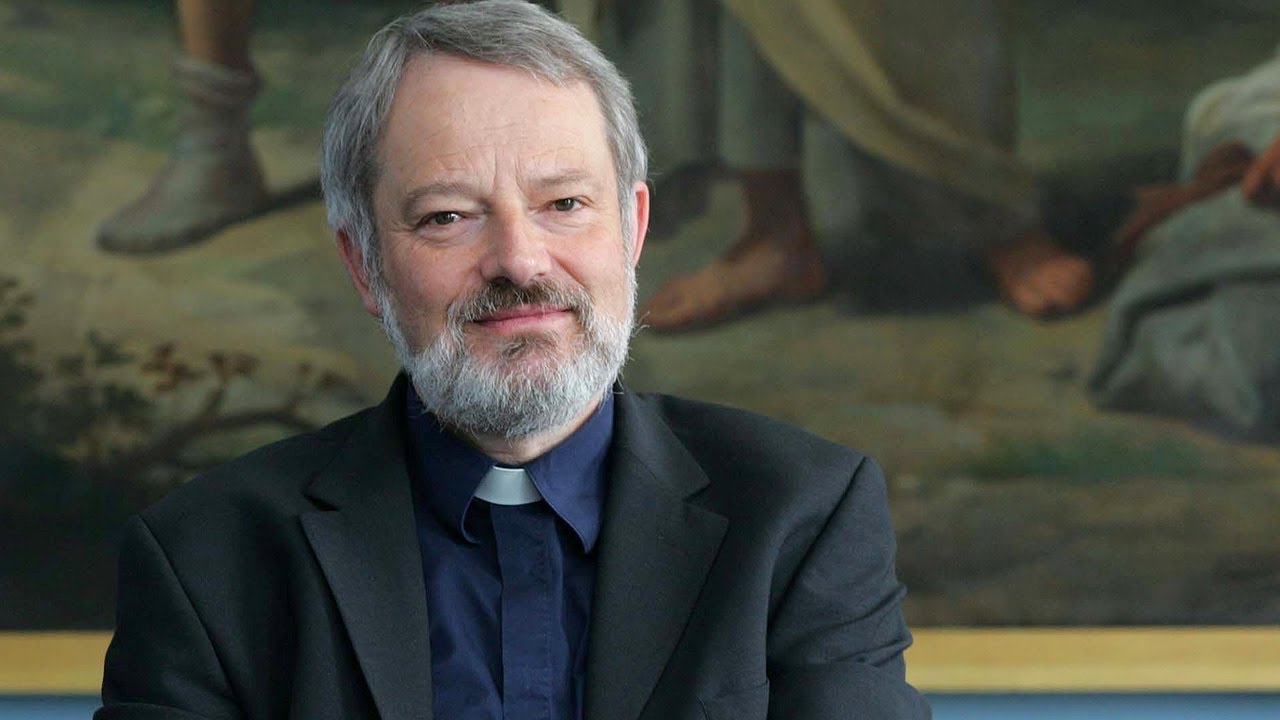
A Catholic Bishop has questioned why any serious Catholic would vote for someone who voted for the radical abortion regime in the last Oireachtas.
In a letter to his diocese, Bishop of Elphin Kevin Doran wrote that, “If we are to reverse the 2018 legislation, which may take many years, and if we are to prevent the legalisation of euthanasia, our first step must be to ensure that we elect public representatives who are committed to the right to life, from conception to natural death”. He added: “For that reason, irrespective of traditional party loyalties, it seems to go completely against the common good for any committed Catholic to vote for a public representative who, in the outgoing Oireachtas, voted for abortion.”
On education he said that public representatives and state bodies need to be clear that parents are the primary educators of their children and any changes in patronage must be planned in consultation with parents. Likewise, he said, “there needs to be a commitment that schools which remain under Catholic patronage are free to be Catholic in their inspiration”.
Quoting Pope Francis who said “everything is connected”, Bishop Doran commented that the basic needs of people, such as housing, poverty, education and healthcare are all connected. “The purpose of government is to seek the common good, which is the good of each and of all. The immediate focus of government is society as a whole, but the good of society can only be achieved when the natural rights of each person and each community are respected.”
The bishop in particular outlined his concerns regarding the care of the sick; the problem of housing and homelessness; the care of the environment; our response to migrants and refugees; the education of children; concern for young people; and, the protection of human life.

Parents’ right to decide the education their children will receive is being attacked by the hardline secularist Government in Spain with a spokeswoman for the prime minister saying that children “do not belong to their parents”.
The conservative Vox party is demanding that parents be allowed to opt their children out of sex education class if they wish. The left-wing coalition Government in Spain is pushing back, arguing parents have no such right.
“We want to protect children from sexual content which is being given, for example, to children up to the age of six,” said Vox’s leader Santiago Abascal on Monday. “I have no doubt that they should not be taught any kind of erotic game as is happening in some places.”
Mr Abascal appeared to be referring to an educational scheme in the Navarre region, which encourages small children to explore their “sexual curiosity”.
Vox has made its support for a budget bill in the southern region of Murcia contingent on allowing parents to boycott classes they deem inappropriate for their children. The ruling parties of the regional Government have agreed to the measure.
However, although Spain’s 17 regional governments have some control over education matters, this parental authorisation policy is not allowed under national law. Spain’s new coalition government of Socialists and the far-left Podemos party has given the administration in Murcia one month in which to cancel the measure before it takes legal steps.
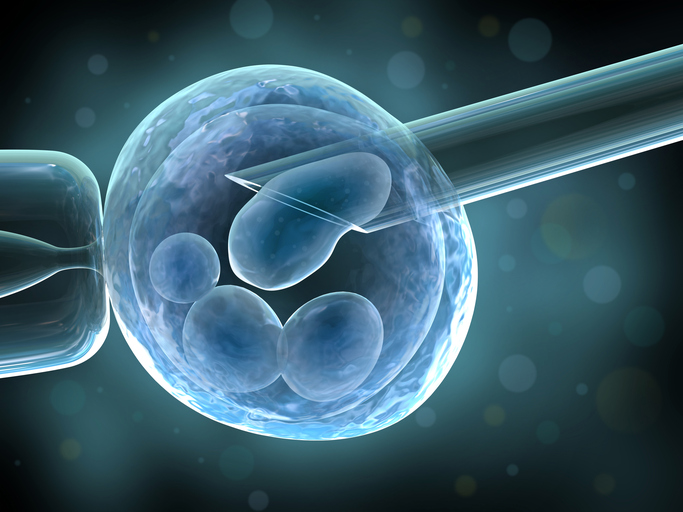
Men in Britain should be able to donate their sperm after death, according to a group of ethicists who argue that posthumous use of sperm would help infertile couples and relieve the pressure on living donors. However, it would mean that a child’s father would be dead before they were ever conceived.
The shortage of sperm donors in the UK has led to at least 7,000 samples being imported each year, primarily from Denmark and the US, to keep up with the demand from fertility clinics.
Under the new proposal published in the Journal of Medical Ethics, men would be allowed to give consent for their sperm to be extracted when they die and then used to help couples have families.
“We know there is a shortage of sperm donors in the UK and this is one way to address the problem,” said Joshua Parker, a doctor and ethicist at Wythenshawe hospital in Manchester, who makes the case with Nathan Hodson, a doctor at the University of Leicester.
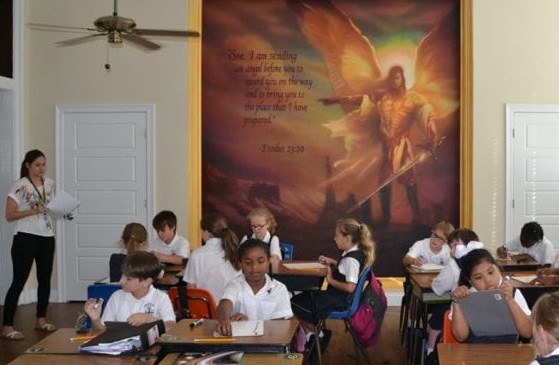
Living in harmony with God’s creation will be the theme of this year’s Catholic Schools Week.
It will be held from Sunday 26 January – Sunday 1 February and families, parishes and schools, North and South, are invited to celebrate Catholic schools and their contribution to the common good.
Commenting on this year’s theme Father Paul Connell, Secretary of the Bishops’ Council for Education, said this year’s theme encourages us to see that we all have a responsibility to care for the earth, not just for our own future, but for the future of every one of God’s creatures.
“In Laudato Si’ Pope Francis has very clearly delivered the message to people all over the world about the need for all of us to care for our common home. Pope Francis challenges us to look at our lifestyles. He asks for justice and equality, as it is clear that climate change is creating a huge amount of suffering and impacting the poorest of the poor in our world; the very people who did least to cause this situation. The hope of Catholic Schools Week 2020 is that we realise how powerful each and every one of us is and that even the smallest changes can have the biggest impact.”
The importance of the European Union in promoting and protecting the right to religious freedom, was emphasised in a meeting in Zagreb on Monday between a delegation of European bishops and Croatian Prime Minister Andrej Plenković.
Croatia is currently presiding over the Council of the European Union and in that context, Prime Minister Plenković met with representatives of the Commission of the Bishops’ Conferences of the European Community, headed by the Archbishop of Luxembourg, Cardinal Jean-Claude Hollerich, and representatives of the Conference of European Churches, headed by pastor Christian Krieger.
After they were informed of the priorities of Croatia’s EU presidency, the bishops underlined the significance and role of the European Union in promoting and protecting the right to religious freedom and confession within their borders as well as in relations with third countries.
Spain’s Catholic bishops have expressed fears of a conflict with the new Socialist-led government over radical plans to strip the Church of thousands of “improperly registered” lands and properties, while restricting religious education and legalising euthanasia.
“The Church isn’t seeking privileges but nor does it want to be discriminated against,” said Bishop Luis Argüello, secretary general of the bishops’ conference. “Our welfare state depends on the Spanish Church’s active role in education, health, social services and care for the elderly. Instead of considering it a residue of the past or a nest of privilege, the authorities should value its work with generosity and solidarity.”
Prime Minister Pedro Sánchez launched his “progressive coalition” with the far-left Unidas Podemos party, led by political scientist Pablo Iglesias.
He is committed under the coalition deal to legislation on a range of “feminist policies”, as well as for “a dignified death and euthanasia”; the scrapping of religious teaching in schools; and “facilitating recovery of assets improperly registered to the Church”.
The assets in question mostly concern lands and properties registered for religious uses in the Spanish Church’s 23,000 parishes in controversial circumstances under a 1998 mortgage law loophole, which was removed in 2015. Cardinal Antonio Cañizares Llovera of Valencia told Catholics in a pastoral letter that their country faced “a critical situation and true emergency”, and needed intensive prayer “in these times of secularisation and the eclipsing of God”.